
Reviewed · MOUNT TEIDE TOURS
Tenerife: Mount Teide Observatory Guided Tour
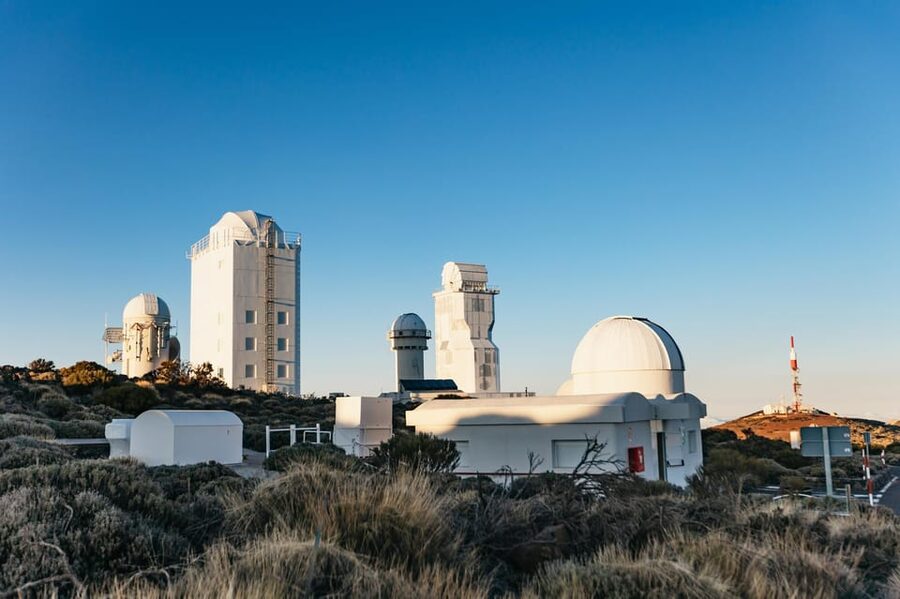
Mount Teide Observatory lets you look at the sun through professional equipment, then step inside the world of night astronomy on Spain’s highest mountain. The two solar telescopes are the main event: one shows sunspots, while the other is set up to reveal solar flares and the sun’s outer glow.
I like the way the tour makes a technical subject easy to follow, with a short film, visual explanations, and a guide who can answer questions without turning the visit into a science lecture. I also like the setting: the observatory sits high above Tenerife in stark volcanic surroundings, with wide views and huge telescope buildings all around you.
The main drawback is that much of the visit takes place outdoors on gravel paths, at about 2,400 meters. It can be cold, windy, and tiring, while the tour does not give you a full behind-the-scenes look inside every telescope.
In This Review
- Key points to know before you book
- Why Mount Teide is a remarkable place for astronomy
- The opening film makes the science easier to grasp
- The solar telescopes are the tour’s best moment
- A night telescope shows how astronomers work after dark
- What the 1.5-hour route feels like
- Sun protection and warm clothing are both essential
- Is $25 good value?
- Getting there and planning your visit
- Who will enjoy this observatory tour most?
- The final decision
- FAQ
- How long does the Mount Teide Observatory tour last?
- How much does the tour cost?
- What languages are available?
- Are solar telescopes included?
- Can I visit a professional night telescope?
- Is transportation included?
- What should I bring?
Key points to know before you book
- See the sun safely through two different solar telescopes: One is used for sunspots and another for solar flares.
- Visit a professional night telescope: You learn how large instruments work after dark, even though this is a daytime observatory tour.
- Expect a science-focused visit: The guide covers astronomy, astrophysics, observatory history, and the Canary Islands’ clear skies.
- Allow 1.5 hours on gravel paths: Comfortable clothes and shoes matter, and the tour is not suited to people with mobility or breathing problems.
- Prepare for strong mountain sun and cold shade: Pack sunscreen, sunglasses, a hat, and warm clothing.
- Pay about $25 per person: That is fair value if you want a guided look at working astronomy equipment, but less so if you expect a long telescope session.
Why Mount Teide is a remarkable place for astronomy
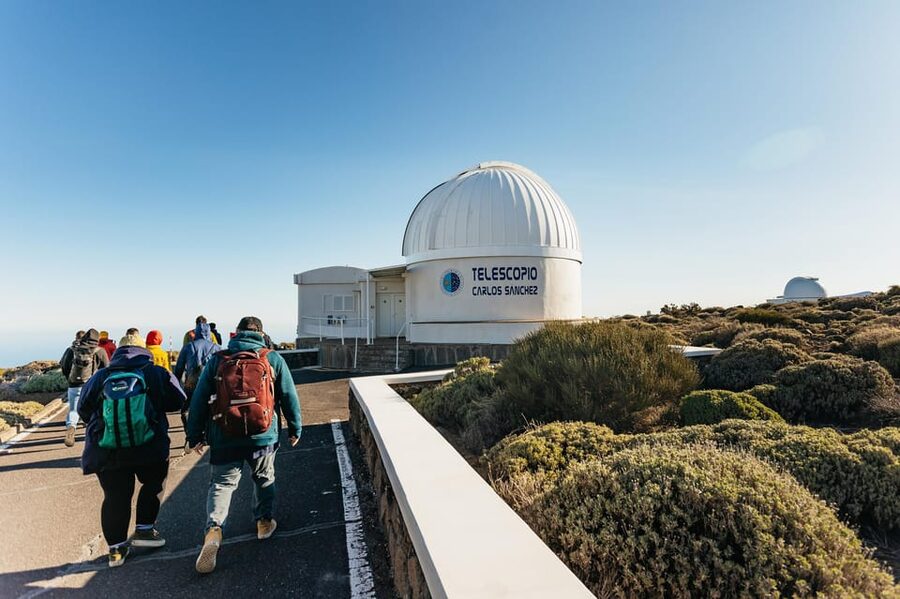
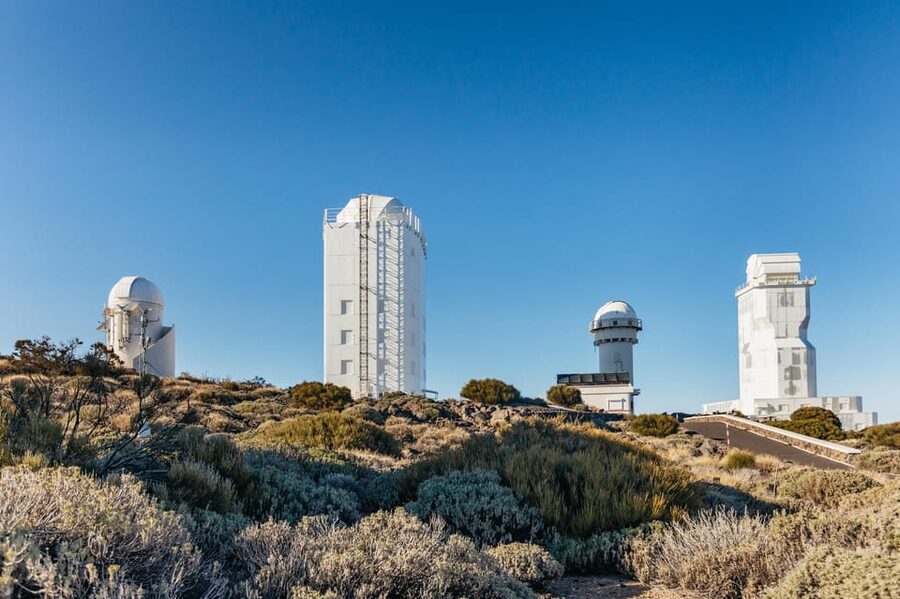
The Mount Teide Observatory is set on Tenerife’s tallest mountain, at roughly 2,400 meters above sea level. The high position matters because the air is thinner and the observatory sits above much of the island’s cloud cover, creating useful conditions for observing the sky.
You will notice the altitude as soon as you start walking. The paths are gravel, the air can feel cold in the shade, and even a gentle route may feel more demanding than it would at sea level. The location is part of the experience, but it is also the reason you should take the health warnings seriously.
The volcanic surroundings add another layer. The ground and distant views can feel almost otherworldly, especially when the light is sharp and the sky is clear. You get far more than a room full of displays, although the tour itself remains focused on science rather than sightseeing.
The observatory is described as the largest solar observatory in the world. That does not mean you will enter every building or inspect every instrument up close. It means you are visiting an important working site, where solar research and night-sky observation take place.
More ways up Mount Teide:
- Tenerife: Mount Teide Tour with Cable Car Ticket & Transfer
★ 4.3 · 5,094 reviews - Tenerife: Teide National Park Sunset & Stargazing Tour
★ 4.2 · 3,812 reviews - Tenerife: Sunset and Stargazing at Teide National Park
★ 4.7 · 2,826 reviews
The opening film makes the science easier to grasp
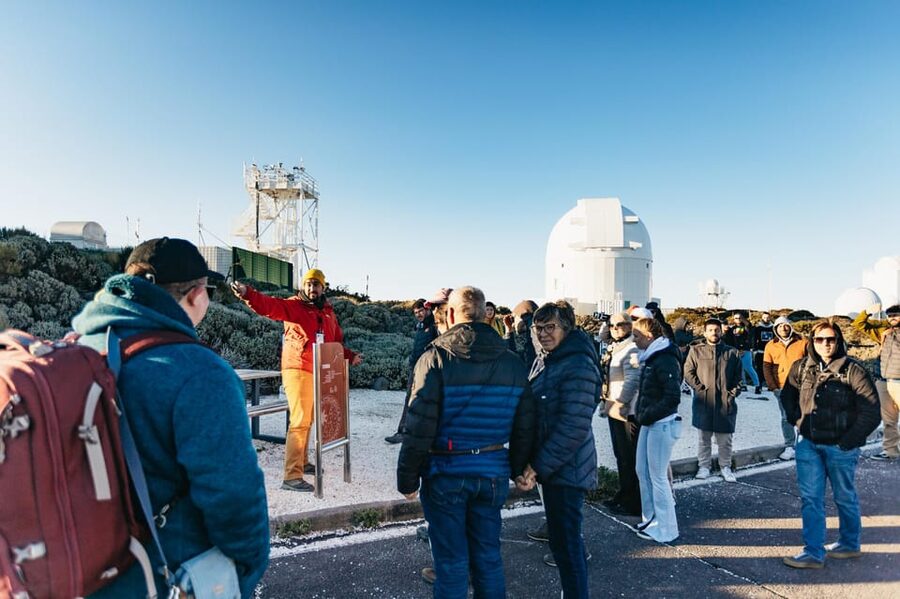
The tour begins with an introduction to the different parts of the observatory. You then watch a short video about the Canary Islands’ sky and how telescopes operate at night.
This is a useful start because it gives you a basic map of what you are about to see. If you are not an astronomy expert, the film and visual aids help explain why the islands are suited to observation and what astronomers are trying to measure.
The guide then introduces astronomy and astrophysics in plain terms. The quality of this part depends partly on the individual guide, but the tour has included guides such as Jesus, Steffi, Raquel, and Rachel, with visitors describing the guides as lively, clear, and willing to answer questions. Names and guide assignments can change, so you should not book expecting one particular person.
I especially like that the explanations are not limited to naming the telescopes. You learn how observatory equipment is used, what scientists study, and why different instruments are needed for different parts of the sky.
The solar telescopes are the tour’s best moment
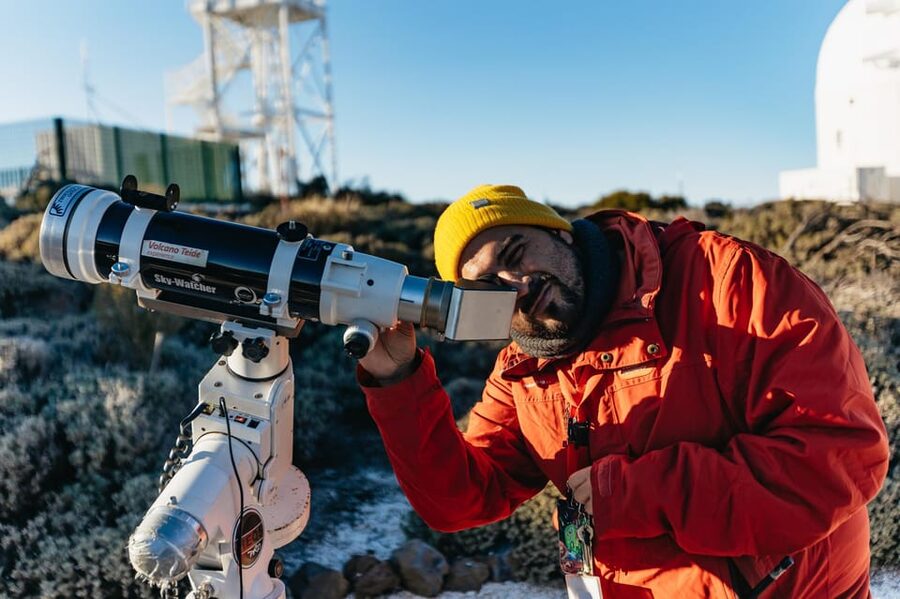
The clearest hands-on feature is the chance to observe the sun through two specially prepared solar telescopes. You do not look directly at the sun with an ordinary telescope. The instruments and filters are designed for safe solar viewing, and the guide explains how to use them.
One telescope is used to see sunspots. These dark areas are cooler than the surrounding surface, though they are still unimaginably hot. The other telescope is aimed at solar flares and related activity, giving you a different view of the sun’s changing surface.
The exact view will depend on solar conditions and the day’s weather. You should not expect a giant cinema-style image or a guaranteed burst of activity. One less enthusiastic account found the view modest, with a simple red image rather than dramatic explosions. That is a fair warning for anyone expecting a spectacular close-up.
Still, seeing sunspots or solar activity with your own eye is a strong experience. The guide helps you understand what you are looking at, which makes the small image far more meaningful. Some explanations also cover the sun’s corona and the scale of sunspots, including the striking fact that a single sunspot can be large enough to contain many Earths.
The group normally shares the viewing equipment, so this is not a private telescope session. The pace can feel unhurried, but the time at the scopes is only one part of the 1.5-hour tour.
A night telescope shows how astronomers work after dark
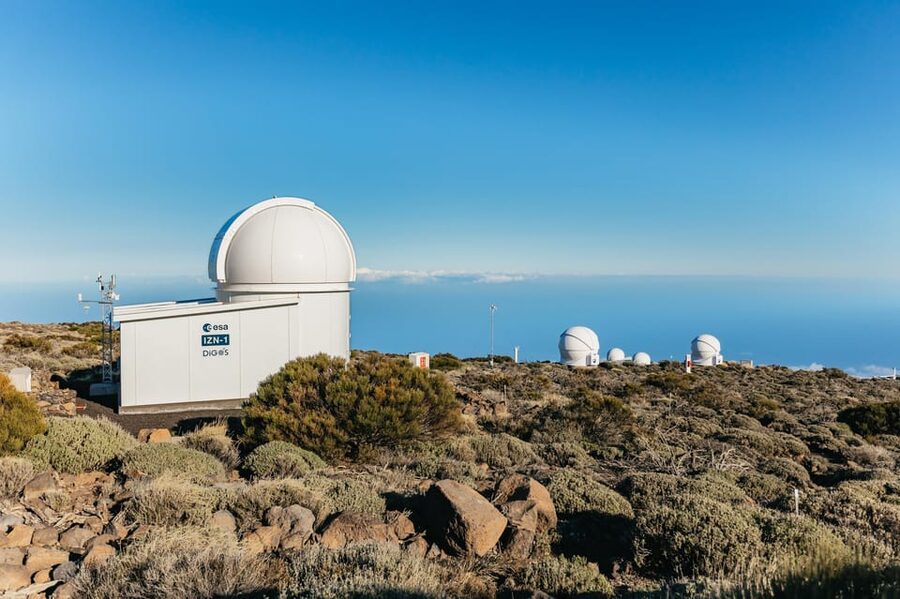
After the solar observation, you visit one of the nocturnal telescopes. This is a valuable change of focus. The sun is close, bright, and active, while night telescopes are built to collect faint light from distant objects.
You learn how these large structures observe the night sky and how the instruments are used by astronomers. The tour is not an evening stargazing session, so you should not expect to see stars, planets, or galaxies through the night telescope during this visit.
The appeal is seeing the scale and design of professional equipment. Some people have been able to go inside a telescope building, while others have wished they could see more instruments from the inside. Access can vary, and the standard tour does not promise an interior visit to every dome or telescope.
That limitation is worth knowing before you book. You are getting an introduction to the observatory’s work, not an unrestricted engineering tour. For most visitors, the combination of the solar telescopes and the night-telescope stop gives enough variety to make the visit worthwhile.
A few more Tenerife trips worth comparing
- Teide: Guided Sunset & Stargazing Tour by Night with Dinner
★ 4.7 · 1,339 reviews - From Tenerife: La Gomera Day Trip with Guide
★ 4.1 · 579 reviews - Tenerife: Jet Ski Guided Tour with Optional Photo Service
★ 4.8 · 491 reviews - Tacoronte: Guided Winery Tour with Wine and Cheese Tastings
★ 4.6 · 481 reviews
What the 1.5-hour route feels like
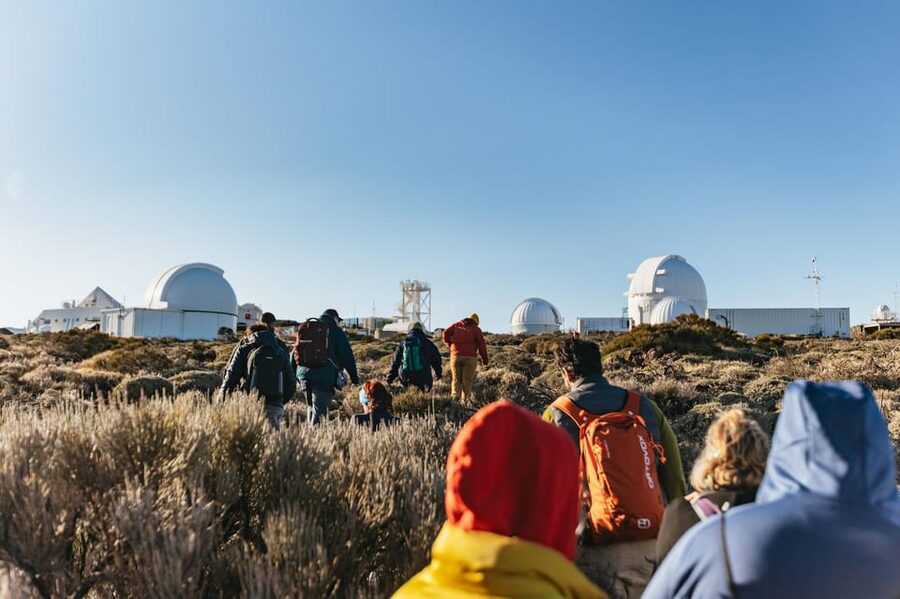
This is a compact tour, not an all-day activity. The opening presentation and film lead into a guided walk through parts of the facility, followed by the solar viewing and night-telescope visit.
Much of the route is outside. You move on gravel paths between buildings, so comfortable shoes are more useful than stylish holiday footwear. The tour may not feel physically hard for a healthy adult, but the altitude, sun, wind, and uneven ground can add up.
There are practical limits to the facilities along the route. One person wished for more toilet stops, and there may be a place to sit and buy water while waiting for the tour to begin. Do not count on frequent breaks, though, and bring your own water.
The tour can feel short because there is a lot to cover. The positive side is that you get a clear introduction without committing half a day to one subject. The negative side is that people already interested in astronomy may want more time inside the telescope buildings or more detailed discussion of the research.
Sun protection and warm clothing are both essential
Mount Teide can produce a strange mix of conditions. Direct sunlight is strong at altitude, yet the shade can be cold. Wind can make the waiting and walking areas feel even cooler.
Pack:
- A warm jacket or several layers
- Sunglasses
- Sunscreen
- A hat
- Comfortable clothes and shoes
- Water
Sun protection is not a minor suggestion here. The combination of high altitude and open ground makes sunscreen and sunglasses especially useful. One tour group was even given sun umbrellas when much of the route was exposed.
Warm clothing matters just as much. A sunny Tenerife holiday can tempt you to leave your jacket behind, but the observatory is high in the mountains. The advice to bring a jacket, hat, and gloves is practical, particularly during cooler months or windy weather.
Children must confirm their age with a passport or ID card, and the experience is not suitable for children under eight. The altitude and gravel paths also make it unsuitable for people with mobility impairments, respiratory issues, anemia, or heart-related health problems.
Is $25 good value?
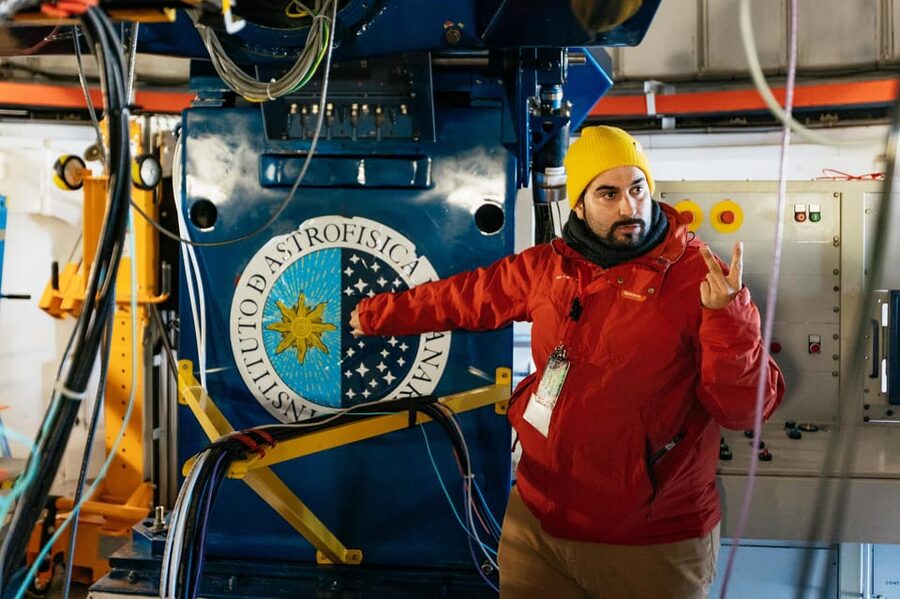
At about $25 per person, the tour is reasonably priced for access to a working observatory, a live guide, two solar telescopes, and a professional night telescope. You are paying for interpretation as much as for equipment. Without the guide, a telescope building can be impressive but difficult to understand.
The value is strongest if you have even a modest interest in space. You do not need a scientific background. The guide and visual material make the subject approachable, and the solar viewing gives you a direct experience rather than a talk alone.
The value is weaker if you mainly want mountain scenery or a dramatic telescope image. Teide offers remarkable views, but this is not primarily a scenic excursion. You also need to arrange your own transportation, since transport, food, and drinks are not included.
For a visitor already planning a trip to Mount Teide, adding the observatory tour makes good sense. It gives the mountain visit a clear purpose and adds a side of Tenerife that many people miss. If you are choosing between this and a more general sightseeing outing, select it only if the science appeals to you.
Getting there and planning your visit
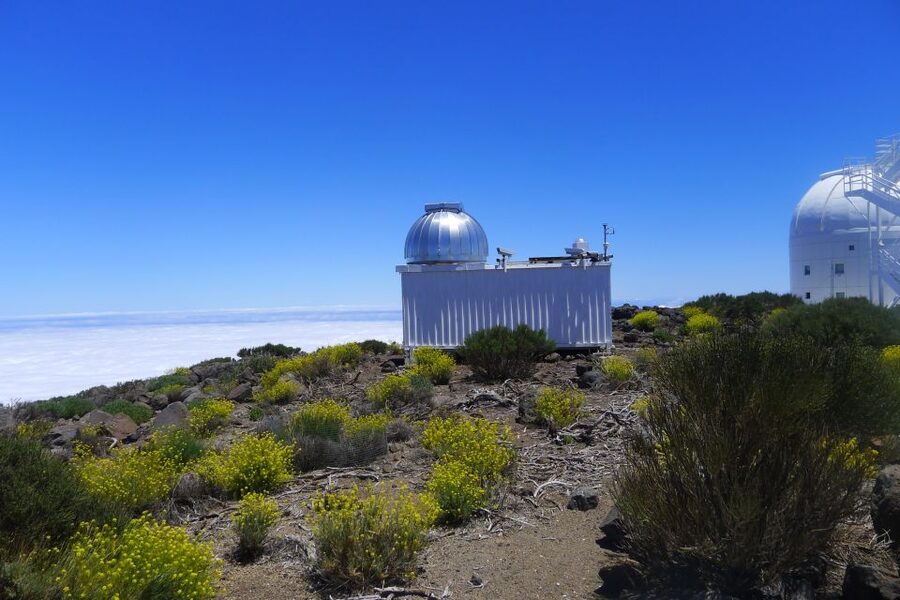
Transportation is not included, and the meeting point can vary with the option you book. Check the exact meeting instructions before setting out, especially if you are driving yourself.
The observatory is easy to spot from the surrounding Teide area, but the mountain drive can feel challenging if you are not used to steep roads and high elevations. Build in enough time to arrive without rushing, since the tour has a set starting time and the meeting point may not be the same for every booking option.
Arriving early can be useful. There may be somewhere to sit and buy water while you wait, but supplies and seating should not be treated as guaranteed. Bring what you need for the full visit.
Tours are offered in English, Spanish, German, and French with a live guide. Starting times depend on availability. Free cancellation is available up to 24 hours before the tour, and you can reserve now and pay later, which helps if your Tenerife plans are still changing.
Who will enjoy this observatory tour most?
I would recommend it to curious adults, older children who meet the age requirement, and anyone who wants more from Teide than a quick photo stop. It also suits people who like guided visits where the expert’s explanation is a major part of the experience.
Families should consider the outdoor route and altitude carefully. The subject can appeal to children, but under-eights cannot join, and younger participants may find the gravel walking and scientific explanations demanding.
You should also think about your physical condition. The tour is not suitable for people with respiratory problems, mobility impairments, anemia, or heart-related conditions. If altitude regularly causes you trouble, this is not the place to test your limits.
Astronomy fans may want to pair this daytime visit with a separate night-sky activity, if available during their stay. This tour explains night telescopes but does not replace actual nighttime observation.
The final decision
I would book the Mount Teide Observatory tour if you want a well-priced, guided introduction to solar science and professional astronomy. The strongest parts are the clear explanations, the chance to use two solar telescopes, and the unusual setting high above Tenerife.
Go in with realistic expectations. You may see sunspots and solar activity, but the image may be modest, and you will not necessarily enter every telescope building. Dress for both cold and intense sun, allow for gravel walking, and arrange your own transport.
For $25, this is a smart addition to a Teide day for anyone with an enquiring mind. If you only want cable-car views or a scenic mountain outing, spend your time elsewhere. If you want to understand what those strange domes are doing on the mountain, book it.
FAQ
How long does the Mount Teide Observatory tour last?
The guided tour lasts approximately 1.5 hours.
How much does the tour cost?
The listed price is $25 per person.
What languages are available?
Live guided tours are available in English, Spanish, German, and French.
Are solar telescopes included?
Yes. The tour includes the use of two solar telescopes, one for viewing sunspots and another for observing solar flares.
Can I visit a professional night telescope?
Yes. The experience includes access to a professional night telescope and an explanation of how large instruments observe the night sky.
Is transportation included?
No. Transportation, food, and drinks are not included. The meeting point may vary depending on the option booked.
What should I bring?
Bring warm clothing, sunglasses, sunscreen, comfortable clothes, and suitable shoes. Children must also bring a passport or ID card to confirm their age.
Recently added around Tenerife
- Tenerife: Luxury Private Whale & Dolphin Watching Tour★ 4.9 · 14 reviews
- Teide National Park: Moonlight Tour & Stargazing Experience★ 5.0 · 14 reviews
- Discover Scuba Diving, free pictures included★ 5.0 · 14 reviews
- Ticket to Aqualand Tenerife★ 4.0 · 15 reviews
- Forest & Off Road National Park Quad Biking Tour★ 5.0 · 14 reviews
- private charter 3 Hours Whale Encounter puerto colon adeje★ 5.0 · 14 reviews
- Tenerife Under The Sea – dive into 1-1 personalised experience★ 5.0 · 15 reviews
- Wine Tasting Experience in Tenerife★ 4.5 · 15 reviews
Mount Teide Tours, compared.
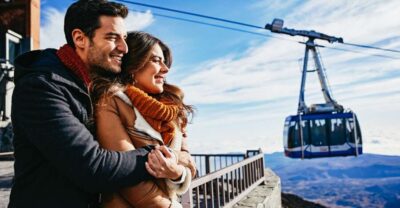
Mount Teide Tour with Cable Car Ticket & Transfer
Read our review →
Teide National Park Sunset & Stargazing with Dinner (Star Safari)
Read our review →
Teide National Park: Sunset & Stargazing Safari with Dinner
Read our review →
Mount Teide, Masca, Icod and Garachico Day Trip
Read our review →
Teide National Park Full-Day Tour with Pickup
Read our review →
Browse the lists this tour appears in