
Reviewed · TENERIFE CANYONING TRIPS
Tenerife: Guided Canyoning Experience
The big draw here is simple: you get to slide 15 meters into a ravine, then work your way through a narrow Tenerife canyon by rappelling, jumping, climbing, and scrambling. It is not a gentle nature walk. The route calls for nerve, strength, and comfort around heights and water.
I like the small groups of five or fewer, which gives the guide room to coach each person through the technical parts. I also like that the price includes boots, wetsuit, helmet, harness, backpack, and insurance, so you do not need to assemble a full canyoning kit. The catch is serious: the final hike can feel more like a climb, and this outing is not suitable for anyone with low fitness, vertigo, medical concerns, or a fear of jumping.
In This Review
- Key points to know before you book
- What the Tenerife canyoning day is really like
- The short approach before the ravine
- Rappelling down cliffs up to 17 meters
- Jumps from smaller ledges to 8 meters
- The 15-meter slide into the ravine
- A snack break, then the harder work
- Equipment included, and what you still need to pack
- Is $135 a fair price?
- Who should book this canyon descent?
- Practical planning for the meeting point
- My call: book it only if the challenge is the point
- FAQ
- How long does the Tenerife canyoning experience last?
- What language does the guide speak?
- How many people are in the group?
- What technical activities are included?
- What equipment is provided?
- What should I bring?
- Who should not take part?
Key points to know before you book
- A 15-meter slide: The biggest feature is a long slide into the canyon, along with jumps of up to 8 meters.
- Technical rappelling: You may rappel down sections as high as 17 meters, with instruction from your guide.
- A small, personal group: The maximum group size is five participants.
- A demanding return hike: The walk back includes steep, physical sections on hot, dry ground.
- Useful equipment included: Boots, wetsuit, helmet, harness, backpack, guide, and insurance are covered.
- Best for confident, fit adults: Participants must be at least 16, injury-free, able to swim, and comfortable with heights.
What the Tenerife canyoning day is really like
This is an adventure built around movement. You are not simply looking at a canyon from a trail. You are entering it, then using ropes, water, rock, and your own legs to get through.
The day begins by meeting your guide at a small place on the left side of the road. The exact starting time depends on availability, so check carefully when booking. There is no hotel pickup or drop-off included in the formal arrangements, even though one past account described being collected from a hotel. I would plan to reach the meeting point under your own steam unless the operator confirms transport directly.
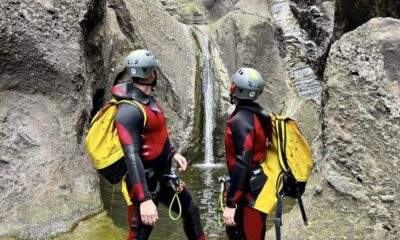
Your guide helps you get fitted with the required equipment and explains the techniques before the descent starts. You receive a helmet, harness, wetsuit, hiking boots, and backpack. That matters here. Good footwear and proper rope equipment are not optional extras in a canyon with wet sections, jumps, and rappels.
The language options are English and Spanish. The group limit of five is one of the better features of this trip. A canyoning guide needs time to check each person’s footing, explain a rope move, and decide when someone is ready for the next obstacle. A tiny group makes that far more practical than a large outdoor tour.
More canyoning in Tenerife’s barrancos:
- Tenerife: Guided Canyoning Experience in Los Arcos
★ 4.8 · 230 reviews - Tenerife: Los Arcos Canyoning Tour with Guide
★ 5.0 · 207 reviews - Small-Group Half-Day Canyoning in La Orotava
★ 5.0 · 58 reviews
The short approach before the ravine
Before the technical action begins, you walk toward the canyon entrance. This approach gives you time to get used to the boots and equipment and to hear the safety briefing.
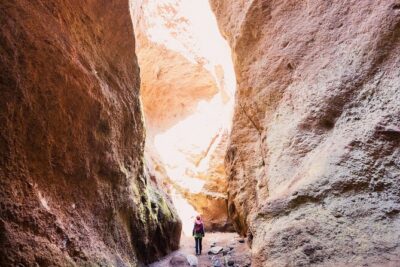
The first sight of the ravine sets the tone. The canyon narrows between high cliffs, and the route ahead looks less like a marked walking path and more like a natural obstacle course. The scenery is a major part of the appeal, but you will appreciate it in short bursts. Most of your attention goes to where you place your feet and how you handle the next move.
This is also the point to speak up. If a jump or rappel already feels beyond your comfort level, tell the guide early. The safety notes for this outing are unusually direct: you need to be fearless with jumping, free of injuries, and in top physical shape. That is not fine print to skim over.
Rappelling down cliffs up to 17 meters
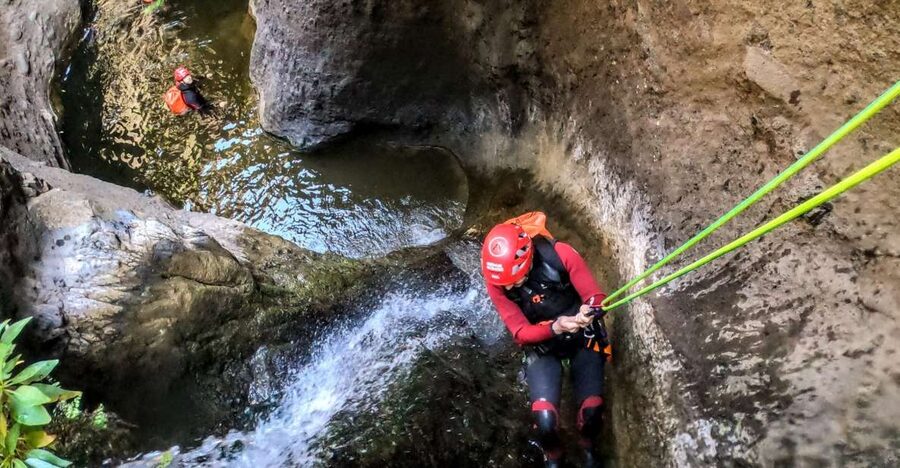
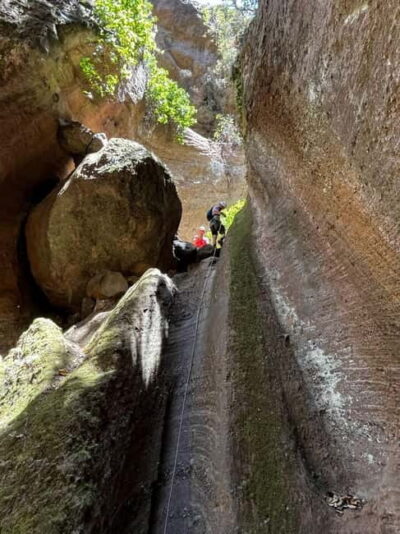
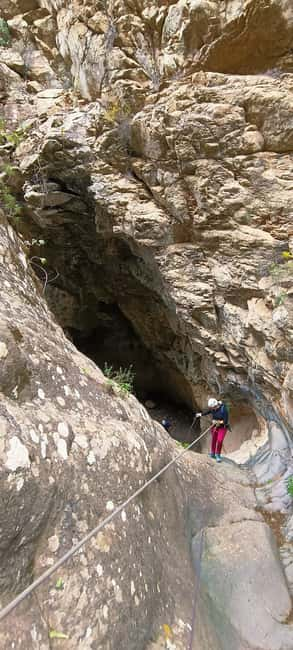
Rappelling is one of the main skills of the descent. You use the harness and rope to move down cliff sections, with the guide showing you how to position your body and manage the descent.
The highest stated rappel reaches 17 meters. That is high enough to feel serious, particularly when you look down into a narrow ravine. You do not need prior canyoning information in order to join, since the guide teaches the required techniques, but you do need to stay calm and follow directions carefully.
I like the way this kind of activity turns scenery into something physical. A cliff is not just a wall in the background. You are moving down it, checking the rope, and feeling the space open around you. The tradeoff is that people with a fear of heights or vertigo should not try to force themselves through the experience. This is not the right setting for testing that fear.
The guide’s role is especially important here. Past outings led by Jorge were praised for clear instruction, patience, humor, and a strong sense of safety. The supplied information does not guarantee that Jorge will lead every departure, so treat him as a possible guide rather than a promise. Still, the praise points to what you should expect from a good outing: careful explanations, room for questions, and no pressure to act recklessly.
Jumps from smaller ledges to 8 meters
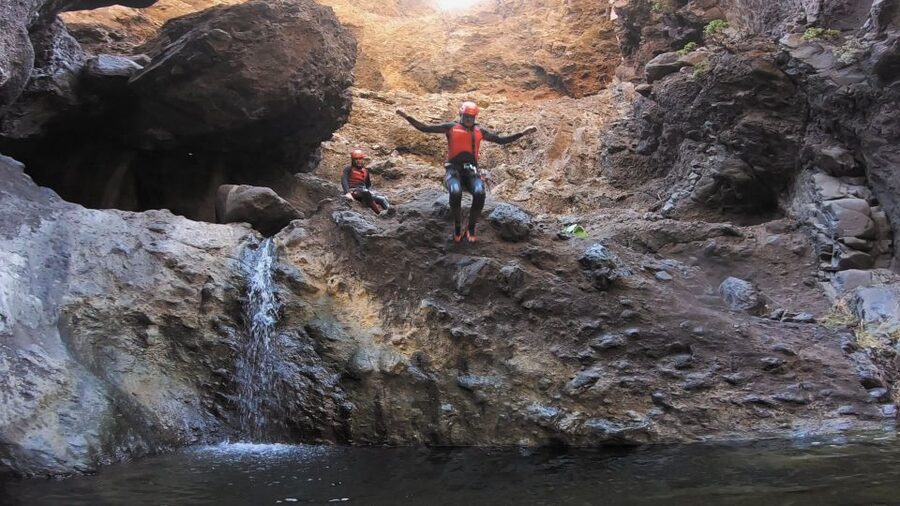
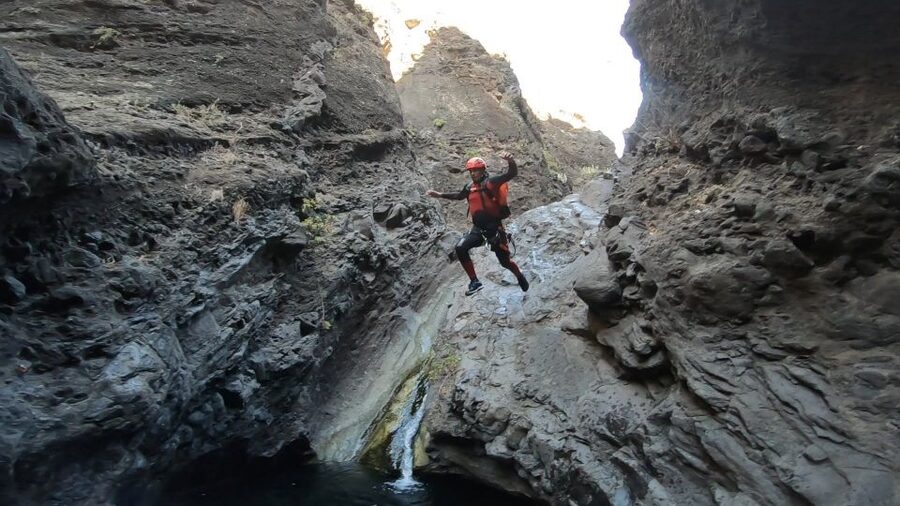
The canyon includes several jumps. Some are modest, while the largest reach about 8 meters. You may have to judge the landing area, commit to the movement, and then swim or continue through the water.
This is where the tour becomes very different from a standard hiking trip. You are not just walking beside a stream or taking photographs from a viewpoint. The route asks you to make decisions with your body, often after a moment of hesitation.
The word up to matters. It does not mean every participant must take the full 8-meter jump. The guide will explain the available moves, but the outing is designed for people who are already comfortable with jumping. The activity information specifically excludes non-swimmers and people who are afraid of heights, so you should be able to enter the water with confidence.
If you are fit but cautious, the small group can help. You have time to watch the technique and ask questions instead of being rushed along with a crowd. If you dislike heights, cold water, or the pressure of committing to a jump, choose a less technical excursion in Tenerife.
A few more Tenerife trips worth comparing
- Teide: Guided Sunset & Stargazing Tour by Night with Dinner
★ 4.7 · 1,339 reviews - Tenerife: Mount Teide Observatory Guided Tour
★ 4.6 · 818 reviews - From Tenerife: La Gomera Day Trip with Guide
★ 4.1 · 579 reviews - Tenerife: Jet Ski Guided Tour with Optional Photo Service
★ 4.8 · 491 reviews
The 15-meter slide into the ravine
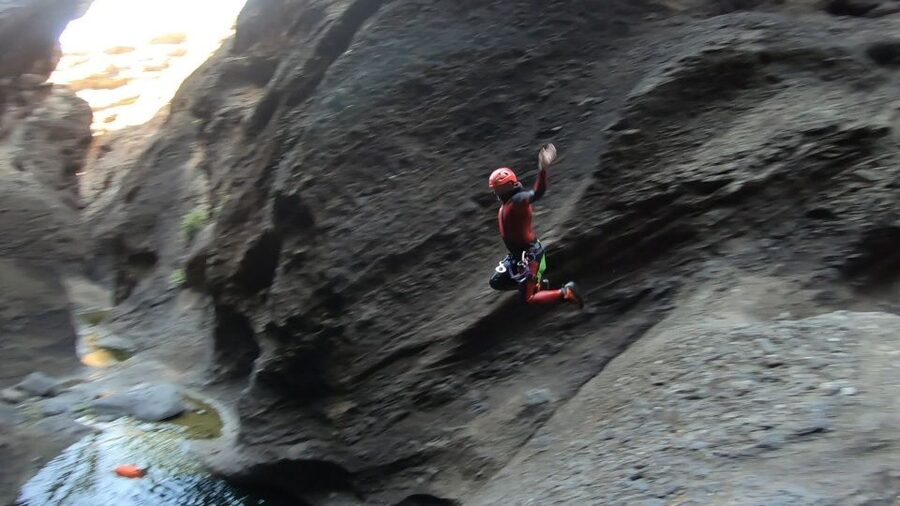
The signature moment is the 15-meter slide. You travel down a smooth section of the canyon and into the ravine, combining speed, water, and a close view of the rock around you.
This is the sort of feature that makes the price easier to understand. You are paying for access to a route that would be difficult to manage safely alone, plus the equipment and instruction needed to take it on. The slide is not a quick amusement-park ride added to a sightseeing trip. It is part of a full descent that also includes walking, climbing, rappelling, and jumps.
Expect the canyon to feel enclosed here. The cliffs rise close around you, producing the dream-like atmosphere described for the route. It is a striking setting, but also one where you need to stay alert. Wet rock, tight passages, and changing footing demand attention.
Bring a way to protect anything you need to keep dry only if the guide permits it. The supplied information promises spectacular views, but it does not specify a photography system or waterproof camera arrangement. Your safest assumption is that the activity comes first and photographs second.
A snack break, then the harder work
After the main descent, you get a small break to eat and recharge before continuing. Food and drinks are not included, so pack your own snack and water.
That pause is more useful than it sounds. Canyoning uses your arms and legs in unfamiliar ways, and the return section is not an easy stroll. A few minutes to eat and drink can make a real difference before the final effort.
The next section offers views from a slope and may require you to move on all fours. This is a good reminder that the activity does not end when the biggest slide or rappel is over. You still need energy for the way out.
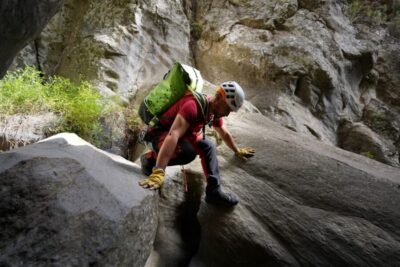
The hike back is the main physical drawback. One account described it as closer to a climb than a hike, and the official guidance warns that it is demanding in hot, dry surroundings. I would not book this as your first active outing after a long period without exercise. You should be comfortable with sustained effort, uneven ground, and using your hands as well as your feet.
Equipment included, and what you still need to pack
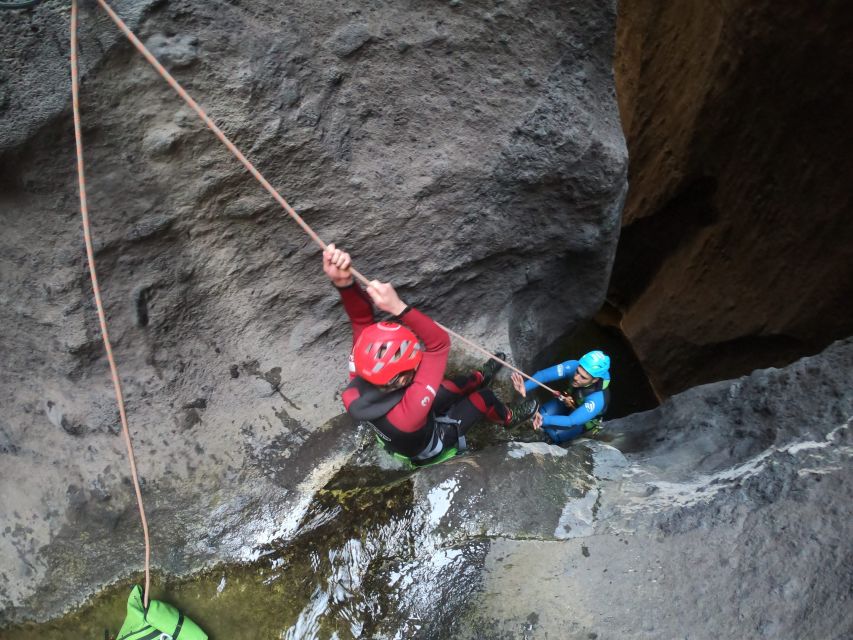
The equipment list is generous for a $135 per-person outing. It includes:
- Hiking boots
- Backpack
- Helmet
- Harness
- Wetsuit
- Guide
- Insurance
That package reduces the amount of specialist gear you need to bring. The wetsuit is particularly useful for the water sections, while the helmet and harness cover the obvious safety needs.
You still need to bring water, food, beachwear, outdoor clothing, sportswear, and any personal medication. Beachwear is likely to go beneath the wetsuit, while outdoor and sports clothing will help before and after the canyon section. You should also bring spare clothes, since the day includes water and you are expected to change at the end.
Do not forget practical basics. You need enough food and water for a physically demanding day, not just a small drink for the drive home. Personal medication should stay with you rather than in a vehicle or at the meeting point.
Is $135 a fair price?
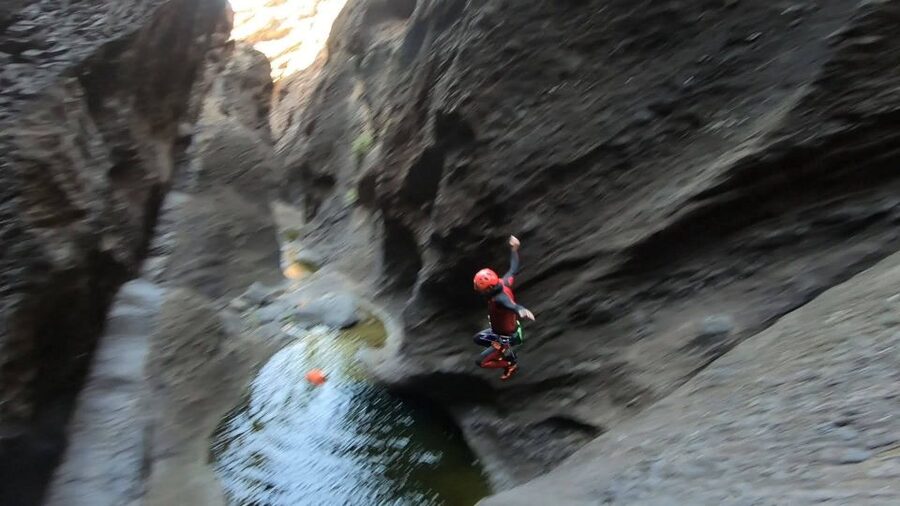
At $135, this is not a budget activity. I think the value is reasonable for the right person because the cost covers a guide, a small group, specialist equipment, and insurance. You are also paying for access to a canyon route that requires technical handling and would be a poor choice to attempt without proper gear or instruction.
The value drops sharply if you are unsure about the physical requirements. You may pay for an experience you cannot comfortably complete if you have poor fitness, fear of heights, or no confidence in water. This is one of those activities where the cheapest decision is often choosing the correct level before you book.
The small group helps justify the price. With five or fewer participants, you are not simply one person in a long line waiting for a rappel. The guide can watch your technique and give more direct help. The published rating is five out of five from five verified bookings, with particular praise for the guides’ friendliness, humor, technical ability, and attention to safety. That is a small sample, so I would not treat it as a guarantee, but it matches the structure of the experience.
Who should book this canyon descent?
I would recommend it to a fit adult who wants a full-body outdoor challenge rather than a passive sightseeing tour. You should be comfortable with heights, able to swim, willing to jump, and ready to work hard on the return.
It is suitable for participants aged 16 and older, but age alone does not make someone ready. The activity excludes people over 60, people above 243 pounds or 110 kilograms, pregnant women, non-swimmers, and anyone with heart, back, mobility, or other pre-existing medical conditions. People with a low fitness level should also avoid it.
The description calls for participants to be injury-free and in top physical shape. Take that literally. If you are recovering from a knee, ankle, shoulder, or back issue, the mix of jumping, rappelling, climbing, and crawling is not a sensible test.
This outing is also a poor match for anyone who wants a relaxed introduction to canyon scenery. The route has views, but you will reach them while managing ropes, water, rock, and fatigue. Choose it for the action first, scenery second.
Practical planning for the meeting point
The meeting point is described as a small place on the left side of the road where you can wait for the guide. That is not a grand landmark, so allow time to identify it and confirm the exact directions before setting out.
Hotel transportation is not included in the stated arrangements. One previous participant described hotel pickup, but I would not rely on that account. Confirm directly if transport is important to your plans.
The activity is valid for one day, with departure times available according to the booking calendar. You can cancel up to 24 hours ahead for a full refund, and the reserve-now, pay-later option gives you some flexibility while arranging your Tenerife plans.
My call: book it only if the challenge is the point
You should book this Tenerife canyoning experience if you want rappelling up to 17 meters, jumps up to 8 meters, a 15-meter slide, and a demanding climb back through a dramatic ravine. The small group, included equipment, and strong emphasis on guide support make it a practical choice for a confident, fit participant.
You should skip it if you are hoping for an easy walk, dislike heights, cannot swim, or are unsure about your fitness. The final climb is a real part of the day, not an afterthought. Bring food, water, beachwear, spare clothes, and a willingness to get wet and tired. For the right person, this is one of Tenerife’s more active ways to reach places you would not see from an ordinary trail.
FAQ
How long does the Tenerife canyoning experience last?
The activity is listed as valid for one day. Starting times vary, so you need to check availability for the date you want.
What language does the guide speak?
The tour is available with a live guide in English or Spanish.
How many people are in the group?
The group is limited to five participants, creating a small-group experience with more direct guide attention.
What technical activities are included?
You can expect rappelling up to 17 meters, jumps up to 8 meters, and a 15-meter slide into the canyon. The route also includes climbing, walking, and sections where you may need to move on all fours.
What equipment is provided?
The price includes hiking boots, a backpack, helmet, harness, wetsuit, guide, and insurance.
What should I bring?
Bring food, drinks, water, beachwear, outdoor clothing, sportswear, personal medication, and spare clothes for changing after the activity.
Who should not take part?
The activity is not suitable for children under 16, pregnant women, non-swimmers, people afraid of heights or with vertigo, people with back, heart, mobility, or other pre-existing medical conditions, people over 60, people over 243 pounds or 110 kilograms, or anyone with a low fitness level.
Recently added around Tenerife
- Los Cristianos: Stand Up Paddle Board Lesson★ 5.0 · 3 reviews
- Radazul: Family-Friendly Snorkeling Tour★ 5.0 · 3 reviews
- 3h Whale Watching Private tour Beneteau Oceanis 440★ 5.0 · 3 reviews
- Go West – VIP Private Tour in Tenerife to Masca, Garachico and Icod★ 5.0 · 3 reviews
- Tenerife Exclusive & Private Gastronomic, Sunset-Stargazing★ 5.0 · 3 reviews
- Whale & Dolphin Watching With Mustcat Virgin Coast Trip On a Large Catamaran★ 4.0 · 3 reviews
- BH SL1 2.9 Road Bike Rental in Tenerife★ 5.0 · 3 reviews
- Eco Adapted Diving in Tenerife★ 5.0 · 3 reviews
Tenerife Canyoning Trips, compared.
Canyoning Tenerife: Canyoning Los Arcos la Orotava
Read our review →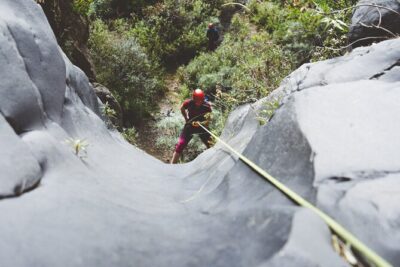
Browse the lists this tour appears in