
Reviewed · SCUBA DIVING
Tenerife : Diving License international in one day
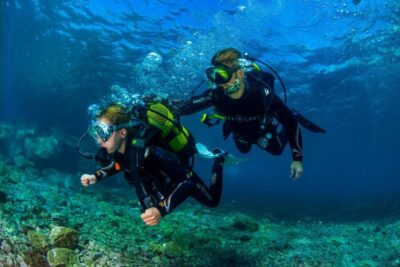
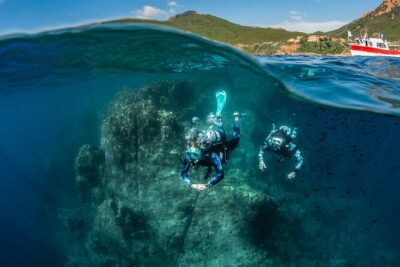
Seeing a sea turtle while earning your first international CMAS scuba license is a fine way to spend four hours in Tenerife. This course starts from zero, uses the beach at Abades for practice, and combines classroom instruction with two underwater sessions.
I like the private maximum-two format, since a beginner gets close attention instead of trying to keep up with a large class. I also like that equipment, accident insurance, the license fee, and underwater photos are included. The main consideration is that this is a serious skills course, not simply a leisurely swim with a mask. You must swim adequately, complete the practical exercises, and avoid air travel for 12 hours afterward.
In This Review
- Key details before you book
- Starting from zero at Abades beach
- Theory that has a job to do
- Two sea sessions with a beach entry
- What the 12-meter license really allows
- A private format worth paying for
- Timing, transport, and what to pack
- Who should take this course
- What the strongest praise tells you
- A few limits to keep in mind
- Should you book this Abades scuba course?
- FAQ
- How long does the CMAS Scuba Diver course last?
- What is the maximum depth allowed with the license?
- Is previous scuba experience required?
- What age must participants be?
- Do I need to know how to swim?
- Which languages are available?
- What equipment is included?
- Can I fly after the course?
- Is transport from my hotel included?
Key details before you book
- Smallest possible group: Train alone or with one other participant, with Spanish, German, or English instruction.
- Beach-based learning: Practice equipment handling on the sand, then try each skill in the water nearby.
- Two underwater sessions: The roughly four-hour course includes theory, practical work, and two sessions in the sea.
- CMAS Scuba Diver license: The qualification allows supervised descents to a maximum of 12 meters, or 40 feet.
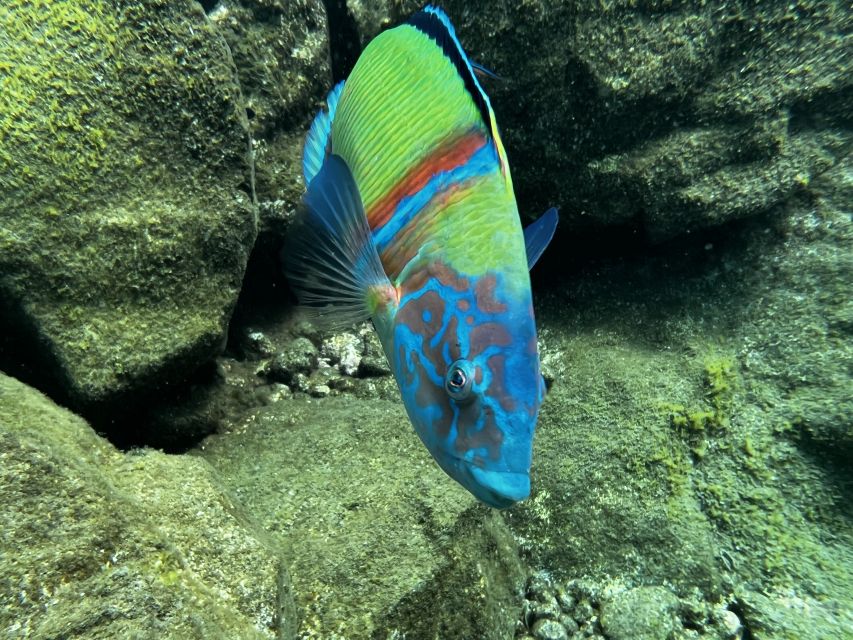
- Turtle possibility: Fish, starfish, reefs, and turtles may appear, but seeing a turtle is never guaranteed.
- Almost everything is covered: Equipment, wetsuit, air tank, insurance, license fee, and photos are included. Transport needs checking in advance.
Starting from zero at Abades beach
This course is built for a first attempt. You do not need previous scuba experience, but you do need to be at least 10 years old, able to swim adequately, and in good health.
The setting helps. Rather than beginning in a distant classroom and waiting hours before entering the water, you learn close to the shore at Abades. The dry exercises take place on the sand, where you can handle the equipment, ask questions, and get used to the weight and layout of the kit before entering the sea.
You learn how the air tank works, how to use lead weights, and how to look after the equipment. These may sound like basic chores, but they matter. A new participant can feel clumsy at first, especially with a tank on the back and unfamiliar gear around the face. Practicing on land lets you sort out those first awkward moments in a calm setting.
Natalie and Andres lead the instruction in Spanish, German, and English. The small group helps them adjust the pace to you. If you are nervous, that matters more than a long list of technical features. One participant who completed the course described having small fears eased through clear explanations, which is exactly the kind of support a first-timer needs.
A few more Tenerife trips worth comparing
- Tenerife: Mount Teide, Masca, Icod and Garachico Day Trip
★ 4.5 · 2,065 reviews - From South Tenerife: La Gomera Island Day Trip with Lunch
★ 4.1 · 1,997 reviews - From Tenerife: La Gomera Day Trip with Guide
★ 4.1 · 579 reviews
Theory that has a job to do
The theory is not there to fill time before the fun begins. It covers the safety rules that let you make sensible choices underwater.
You learn how to equalize pressure, how to move properly, how to control your ascent, and how to orient yourself. You also work on buoyancy, including balancing and hovering. That last skill is especially important because a beginner who constantly kicks or touches the bottom can use air quickly and damage delicate sea life.
The course also covers what to do with your equipment before and after the session. You learn how to handle the tank, manage the weights, and care for the kit. It is practical instruction, not a short briefing followed by a guide pulling you through the water.
The safety side includes issues connected with the heart, lungs, and ears. Do not treat this as a casual formality. If you have problems in these areas, the course information says you should not take part. You must also be able to complete the practical exercises properly to receive the license.
Two sea sessions with a beach entry
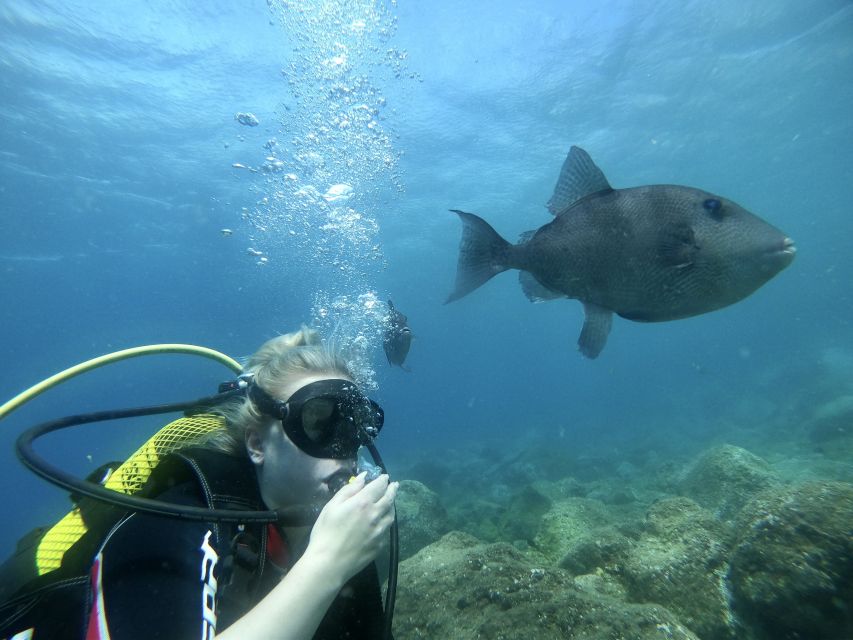
After the dry practice, you take the skills into the water. The beach entry is useful for a beginner because you do not have to climb onto a boat, jump from a platform, or manage a moving vessel before concentrating on the basics.
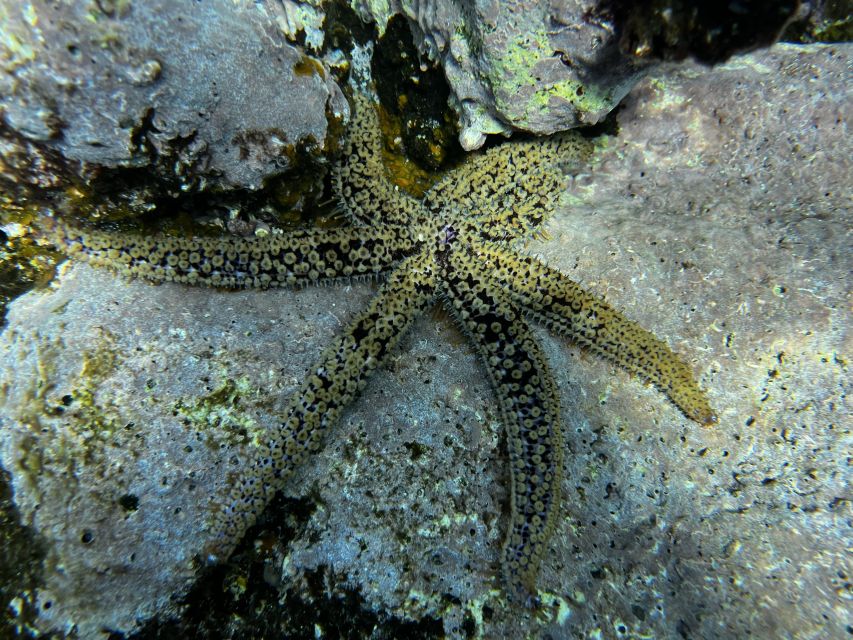
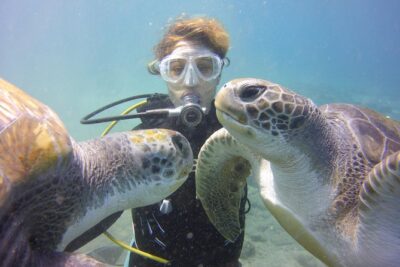
The exact underwater route and wildlife sightings can vary. The supplied information points to fish, turtles, starfish, reefs, and other sea life, with a particularly good chance of a turtle photo. Still, a turtle is a lucky sighting, not part of a guarantee. A named turtle called Lola has become a memorable possibility for some participants, but the right expectation is simple: enjoy the sea even if Lola stays out of sight.
The first underwater session gives you a chance to use the skills while your instructor watches closely. You work on breathing, pressure equalization, movement, orientation, and buoyancy. The second session lets you reinforce those skills and gain more comfort in the water.
The course also includes a visit to a national park for a sea session. The information does not specify the park name or exact route, so you should not book this expecting a fixed wildlife list or a particular reef. What you can expect is a first look at Tenerife’s underwater world, with instruction woven into the experience.
What the 12-meter license really allows
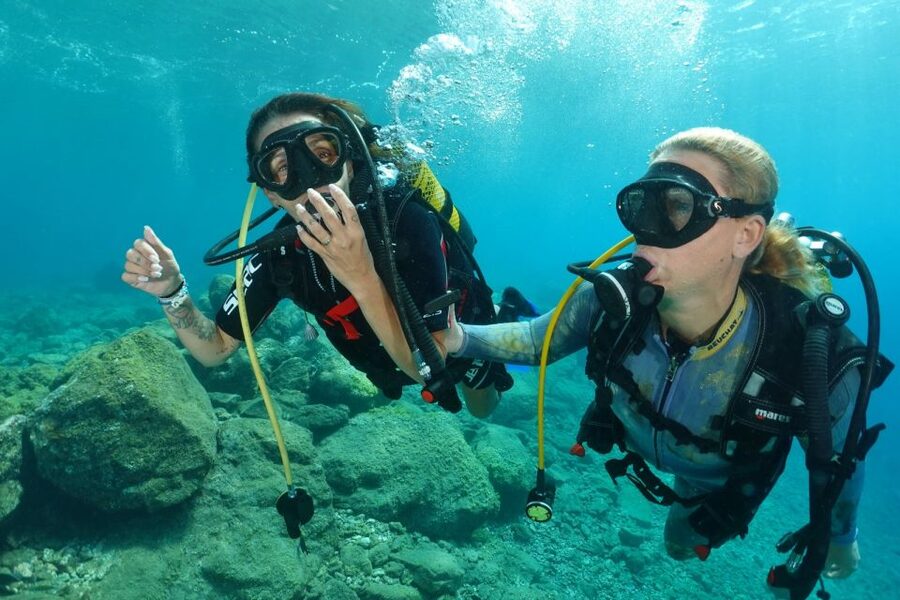
At the end, you receive a CMAS Scuba Diver license. It is internationally recognized and allows you to obtain tank refills, rent scuba equipment, and join underwater activities around the world.
There is an important limit. This qualification allows you to descend to a maximum of 12 meters, or 40 feet, under supervision. It is not the same as an unrestricted qualification for independent scuba trips. You should tell future operators exactly which license you hold and follow their rules about supervision, depth, and conditions.
You also need to complete the course without serious difficulty. The license is not automatic simply because you paid for the session. If you cannot perform the practical exercises, you cannot receive the qualification. That rule is sensible, but it is worth knowing before you arrive.
For a visitor who wants a legitimate first step rather than a one-time introduction, this makes the course more useful. You leave with a qualification that can support future training and supervised activities. For someone who only wants to try breathing underwater once, the license requirements may feel more demanding than expected.
More dive trips off Tenerife:
- Tenerife: Beginners Scuba Dive Experience in Turtle Area
★ 4.6 · 1,347 reviews - Tenerife First Time Scuba Dive – Turtle Habitat, Small Groups
★ 4.5 · 456 reviews - Try Dive – PADI Discover Scuba Diving in Tenerife
★ 5.0 · 214 reviews - Tenerife: Abades Beach Beginner Diving Experience
★ 4.7 · 164 reviews
A private format worth paying for
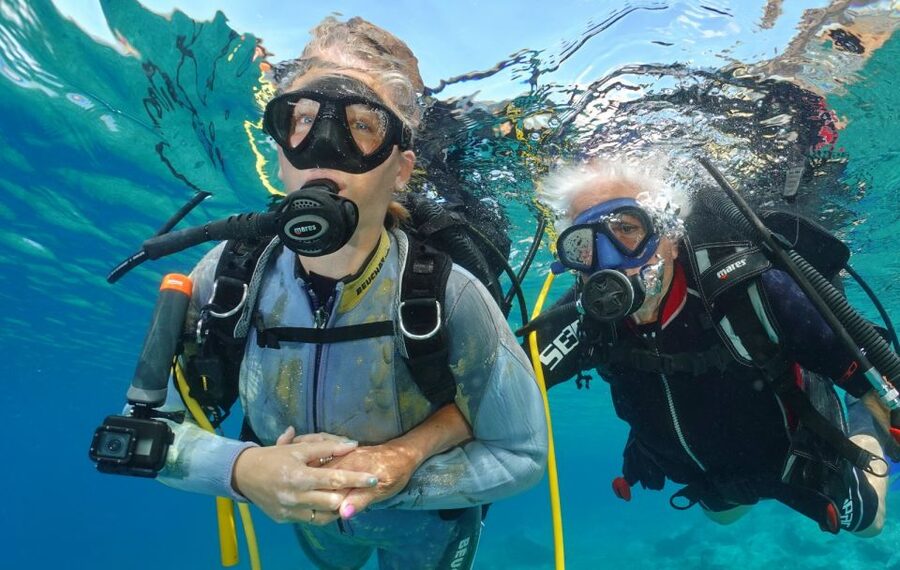
The price is $259 per person. That is not the cheapest way to spend a morning at the coast, but the cost includes much more than a guided swim.
You receive the full scuba setup, wetsuit, air tank, license fee, diving accident insurance, and underwater photos. The private format is capped at two people, or you can arrange one-on-one instruction. For a beginner, that level of personal attention can make the price easier to justify.
The photos add practical value, too. Underwater pictures can be awkward to arrange on your own during a first session, when you are already thinking about breathing, buoyancy, and hand signals. Here they are included as a record of the day. One participant also noted receiving photos and videos as a keepsake.
The value depends on your goal. If you want a relaxed beach activity with little instruction, you may find the course expensive and too structured. If you want equipment, training, insurance, a license, and two sea sessions in one compact day, the package is more convincing.
Timing, transport, and what to pack
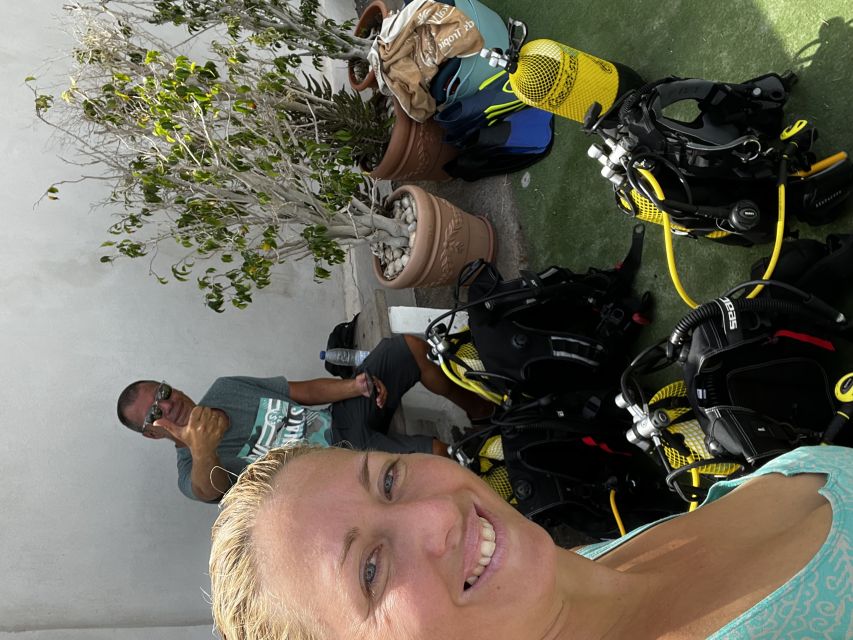
The listed duration is about four hours. Starting times depend on availability, so check the schedule before planning the rest of your day. The course is short enough to fit into many Tenerife itineraries, but it still requires concentration and physical effort.
Bring swimwear and a towel. Glasses must be removed for underwater activities, so contact lenses or prescription underwater solutions may be worth discussing with the provider if you need vision correction. The supplied information does not state that prescription masks are available, so do not assume one will be provided.
There is a transport detail to clarify. One part of the information says transport cannot be offered, while another says pickup can be arranged if you provide your hotel name. A participant was returned to a ship harbor on time after completing the course, but you should still confirm your own pickup and drop-off arrangements before booking. Do not build a tight airport or ferry connection around an assumption.
Most important, leave at least 12 hours between the course and any flight. The course information specifically warns against flying during that period. This makes a morning session on the day before departure a safer planning choice than a late course before an early flight.
Who should take this course
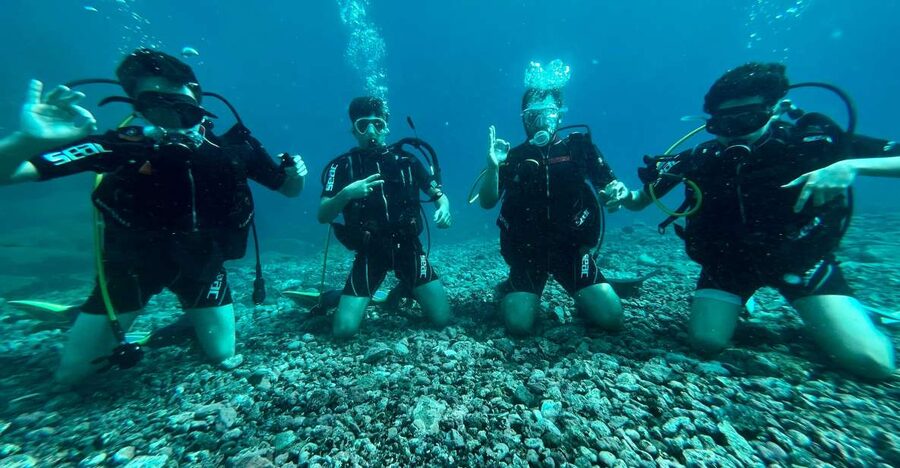
This suits a first-time participant who wants a recognized starting qualification and prefers close instruction. It is also a good fit for families with an eligible child, provided the child is at least 10, can swim adequately, and is comfortable completing the required exercises.
A 10-year-old participant completed the course successfully and enjoyed it greatly. That does not mean every child will find it easy. Young participants need to meet the same water and practical requirements, and parents should be realistic about attention span, confidence, and comfort with the equipment.
The course also works well for someone who feels nervous. Natalie and Andres teach in three languages, and the one-on-one or two-person arrangement gives you room to ask basic questions without embarrassment.
It is not suitable for non-swimmers or pregnant women. It is also unsuitable for people with heart, lung, or ear problems, according to the stated safety guidance. If you have a medical concern, get appropriate professional advice before reserving.
What the strongest praise tells you
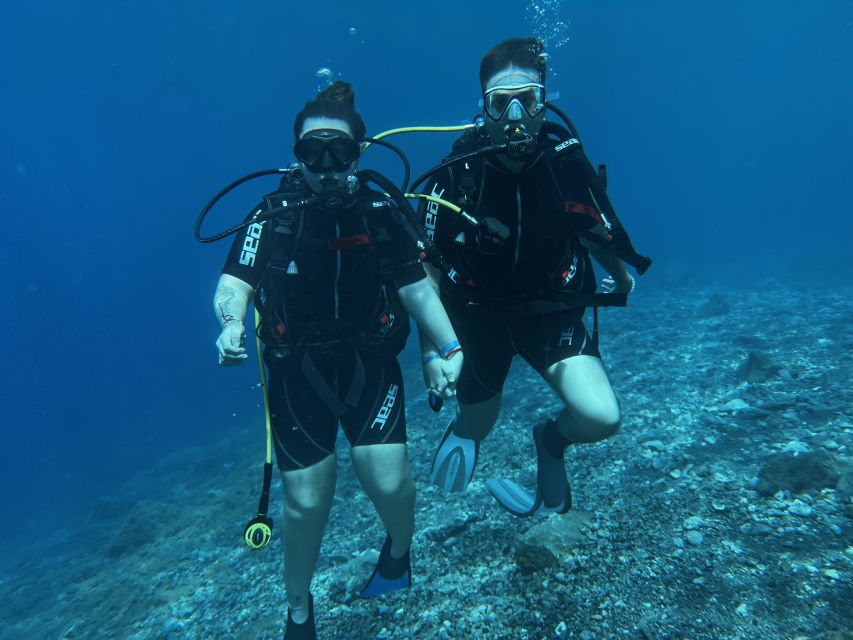
The clearest positive pattern is the personal care. Participants repeatedly describe feeling comfortable, well supported, and clearly instructed. That praise matters here because confidence is part of learning to breathe and move underwater.
The instructors, Natalie and Andres, receive especially warm attention. Their enthusiasm for the work appears to shape the day, from easing early worries to celebrating a successfully completed license. The practical help seems to be as important as the scenery.
The turtle sightings and photos add memorable touches. One participant saw turtles and returned to a ship harbor on time, while another mentioned the chance of seeing Lola. Keep the wildlife expectation sensible, but the possibility gives the sea sessions extra excitement.
The course has a 5 out of 5 rating from seven submitted ratings. That is encouraging, though it is still a small sample. I would place the greatest weight on the specific details: clear explanations, a relaxed learning atmosphere, successful completion of the license, and included photos.
A few limits to keep in mind
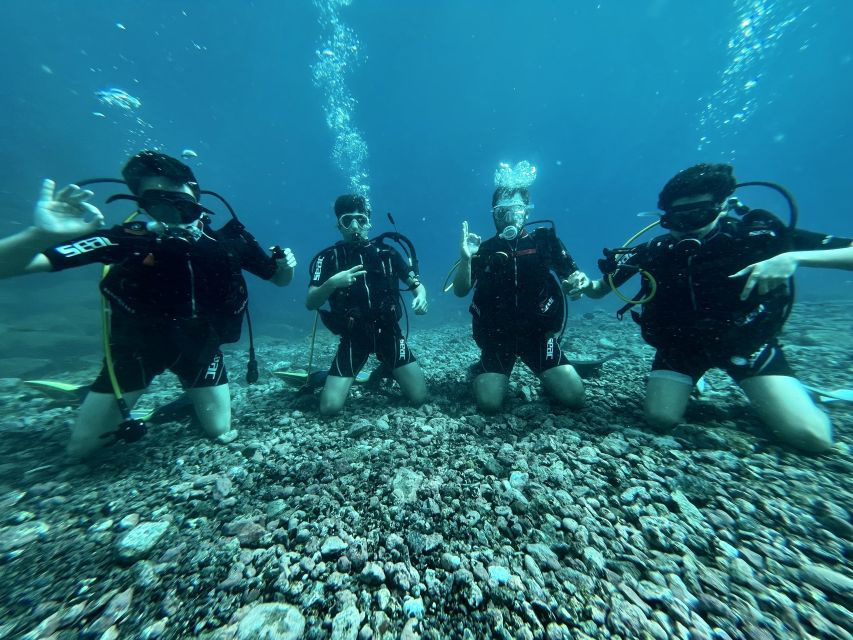
The course promises a first license, not mastery. Four hours is enough for an introduction and the required training described here, but you will still be a newly qualified participant with a 12-meter supervised limit.
Marine life is also unpredictable. Fish, starfish, reefs, and turtles are possible, but the instructor cannot control what appears on the day. If you focus only on getting a turtle photo, you may miss the real achievement, learning to control your body and equipment in the sea.
The practical test can be a hurdle. You cannot receive the license if you cannot complete the exercises. That is good for safety, but it means you should arrive rested, willing to listen, and ready to work rather than expecting a guaranteed certificate.
Finally, transport needs a clear conversation. The conflicting transport details are the one planning issue I would settle before paying. Give the provider your hotel name and ask exactly what is included for your location.
Should you book this Abades scuba course?
Book it if you want more than a tourist swim and like the idea of earning a real first qualification in a private setting. The $259 price is reasonable for the instruction, two sea sessions, full equipment, insurance, license fee, and photos, especially when the group has no more than two people.
Skip it if you cannot swim adequately, have one of the listed health concerns, need to fly within 12 hours, or want a completely effortless wildlife outing. You must complete practical skills to qualify.
For the right participant, this is a focused and friendly way to begin scuba in Tenerife. Go for the careful instruction and the license first. Treat the turtles, Lola, and the photos as welcome extras.
FAQ
How long does the CMAS Scuba Diver course last?
The course lasts about four hours. It includes theory, dry exercises on the sand, wet exercises in the sea, and two underwater sessions.
What is the maximum depth allowed with the license?
The CMAS Scuba Diver license allows you to descend to a maximum of 12 meters, or 40 feet, under supervision.
Is previous scuba experience required?
No. The course is designed for beginners and teaches the basic skills from the start.
What age must participants be?
Participants must be at least 10 years old for the Scuba Diver course.
Do I need to know how to swim?
Yes. You must be able to swim adequately to take part in the water activities.
Which languages are available?
Instruction is available in Spanish, German, and English.
What equipment is included?
Full scuba equipment, a wetsuit, an air tank, the license fee, diving accident insurance, and underwater photos are included.
Can I fly after the course?
You should not fly for 12 hours after the course.
Is transport from my hotel included?
The information says to provide your hotel name to organize pickup, but it also says transport cannot be offered. Confirm the exact pickup and drop-off arrangement with the provider before booking.
Recently added around Tenerife
- Los Cristianos: Stand Up Paddle Board Lesson★ 5.0 · 3 reviews
- Radazul: Family-Friendly Snorkeling Tour★ 5.0 · 3 reviews
- 3h Whale Watching Private tour Beneteau Oceanis 440★ 5.0 · 3 reviews
- Go West – VIP Private Tour in Tenerife to Masca, Garachico and Icod★ 5.0 · 3 reviews
- Tenerife Exclusive & Private Gastronomic, Sunset-Stargazing★ 5.0 · 3 reviews
- Whale & Dolphin Watching With Mustcat Virgin Coast Trip On a Large Catamaran★ 4.0 · 3 reviews
- BH SL1 2.9 Road Bike Rental in Tenerife★ 5.0 · 3 reviews
- Eco Adapted Diving in Tenerife★ 5.0 · 3 reviews
Scuba Diving, compared.
Beginners Scuba Dive Experience in Turtle Area
Read our review →
Tenerife First Time Scuba Dive – Turtle Habitat, Small Groups
Read our review →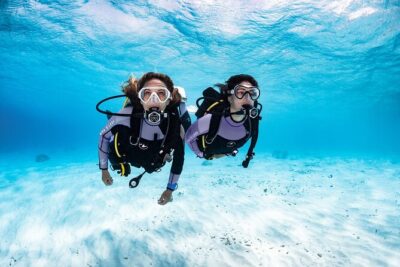
Try Dive – PADI Discover Scuba Diving in Tenerife
Read our review →
Scuba Diving Beginner’s Session in Costa Adeje
Read our review →
guided Scuba Diving on Tenerife (for certified divers)
Read our review →Browse the lists this tour appears in