
Reviewed · MOUNT TEIDE TOURS
Polestar SELF-DRIVE Sunset Stars Tour in Teide National Park
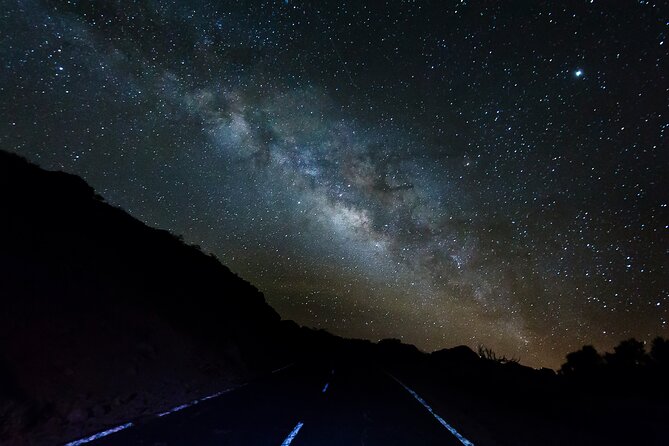
The best part of this Tenerife experience comes after sunset, when the group reaches a dark lookout in Teide National Park and turns a computerized telescope toward the Moon, planets, star clusters, nebulae, and sometimes the Milky Way. You drive your own car, following the guide vehicle, so you get the freedom of a self-drive outing without having to find the best night-sky locations alone.
I like the two-part evening: a glass of cava at a west-facing viewpoint, followed by serious astronomy at Mount Samara. I also like the guides’ warm, clear explanations. Steve and Daniele are named by the operator, and the wider team includes astronomers who can explain Venus, Mars, constellations, and galaxies without making you feel lost.
The main drawback is the self-drive format. You are not riding in a small tour vehicle, and the fee pays for the guides, telescope, locations, and instruction rather than transport. The meeting point can also be crowded, the ending point may change with the weather, and Teide gets very cold after dark.
In This Review
- Key points to know before you book
- Sunset above the western islands
- Following the van through Teide National Park
- Mount Samara and the changing evening light
- The telescope is the reason to pay
- Guides who make astronomy easy to follow
- What the $48.01 price really covers
- Who will enjoy this evening most
- Should you book the Polestar Sunset Stars Tour?
- FAQ
- Where does the Polestar tour start?
- Where does the tour finish?
- How long does the experience last?
- Is transportation included?
- Is this a private tour?
- What drink is included?
- Is dinner included?
- What can you see through the telescope?
- What language is the tour conducted in?
- What happens if the weather is poor?
Key points to know before you book
- Sunset begins at Mirador de los Poleos: Watch the sun drop toward La Gomera and La Palma from a west-facing volcanic lookout.
- A glass of cava is included: You can choose a non-alcoholic drink instead.
- You follow the guide vehicle: This makes the outing self-drive rather than a coach tour or private car excursion.
- The telescope does far more than show the Moon: Depending on conditions, you may see planets, star clusters, galaxies, nebulae, and the Milky Way.
- Warm clothes matter: Several people found the mountain air painfully cold, and warm jackets may be available to borrow.
- The tour is in English only: Children aged 12 and over may enjoy it if they understand English well enough to follow the explanations.
Sunset above the western islands
Your evening starts at Mirador de los Poleos in Santiago del Teide. This viewpoint faces west over the Atlantic, with views toward La Gomera and La Palma. It is also linked to the volcanic eruption recorded by Christopher Columbus in his 1492 ship log, an unusual detail that gives the first stop a little historical character.
This is not simply a roadside pause for a quick photograph. The viewpoint is chosen for the sunset, and the changing light can turn Mount Teide reddish as the sun drops. Clouds below or around the islands may catch vivid colors, giving you one of the strongest photo moments of the evening.
You receive a glass of cava here, or a non-alcoholic drink. It is a small touch, but it suits the pace of the stop. You are not rushing through a checklist. You have time to watch the horizon, take pictures, and listen to the guide explain the volcanic setting.
The meeting point can be busy because more than one astronomy company uses the same area. Look carefully for the correct Polestar or Dark Skies Tenerife team rather than assuming the first group you see is yours. The provider is Stargazing Tenerife, and the self-drive experience is called Polestar. That naming is worth checking before you leave your accommodation.
The start time matters. Although the published schedule can appear less precise, one actual outing began at 6:30 p.m., which allowed enough time for a proper sunset. Contact the operator before the day of the tour to confirm the meeting time, especially if sunset is your main reason for booking.
More ways up Mount Teide:
- Tenerife: Mount Teide Tour with Cable Car Ticket & Transfer
★ 4.3 · 5,094 reviews - Tenerife: Teide National Park Sunset & Stargazing Tour
★ 4.2 · 3,812 reviews - Tenerife: Sunset and Stargazing at Teide National Park
★ 4.7 · 2,826 reviews
Following the van through Teide National Park
After the first viewpoint, you drive behind the company vehicle into Teide National Park. The route is short between some stops, but the main benefit is not distance. It is knowing where to go once the sky grows dark.
This part suits you if you want to explore independently but do not want to spend the evening guessing which pullout has the best view or the least light pollution. You bring your own car, retain control of your schedule during the drive, and avoid being packed into a large coach.
The tradeoff is clear. You are still responsible for driving, navigation, and your car. The self-drive setup does not mean you receive a private tour. The group can include several parties, with a maximum of 45 people, although one outing had about a dozen participants.
If you expected a private experience or a chauffeured trip, the price may feel less attractive. If you value the guide’s telescope, astronomy talk, photography help, and choice of viewing sites, the fee makes more sense. At $48.01 per person, this is priced as an organized stargazing experience rather than simple access to a viewpoint.
Along the way, the group looks at the site of the last recorded eruption in 1909. The stop adds volcanic context before the focus shifts fully to the night sky. You are seeing Teide as an active volcanic region, not just a scenic mountain with a famous summit.
Mount Samara and the changing evening light
The later viewing area is around Mirador de Samara in Guía de Isora, though the exact stargazing point can change according to weather. This flexibility is useful. Cloud, wind, or visibility can make one location poor while another nearby point works well.
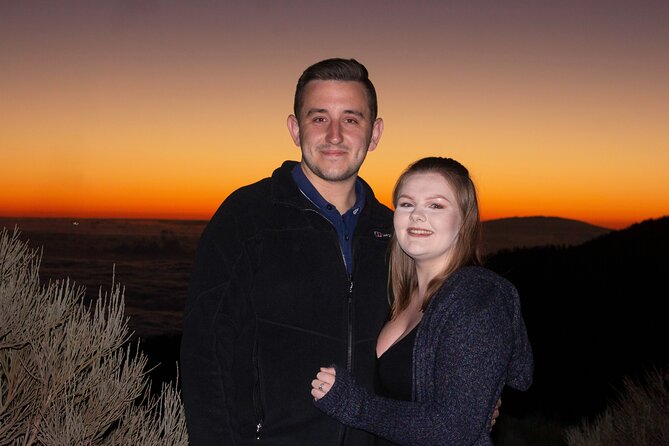
From this part of the park, you may see El Hierro along with the clouds catching the last colors of sunset. The light does not switch off at the moment the sun disappears. For a while, the sky changes through softer shades while the first stars become easier to spot.
The published duration is about two hours and 30 minutes, while the listed itinerary describes roughly two hours. Actual timing depends on the sunset, driving, weather, and how long the group stays with the telescope. One outing began around 6:30 p.m. and finished around 8:45 p.m.
That timing makes warm clothing essential. Teide can feel mild in the sun and harsh after dark. Bring a proper warm layer, long trousers, and something for your hands. Some participants were able to borrow thick jackets, but you should not depend on that being available.
The telescope is the reason to pay
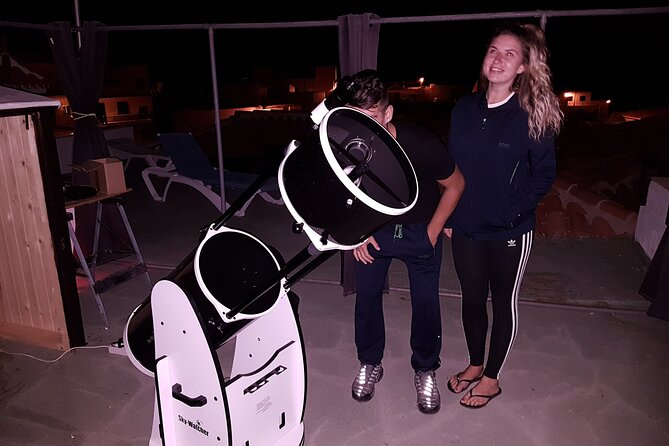
The large computerized telescope changes the nature of the evening. You are not simply standing outside while someone points at a few bright stars with a laser. The equipment can be used to view the Moon, planets, star clusters, nebulae, and galaxies, depending on what is visible and how clear the sky is.
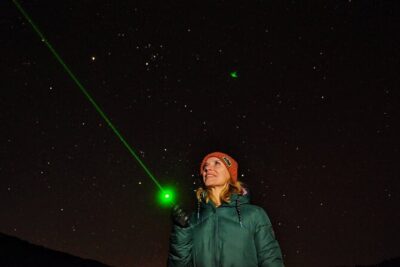
The guides use a laser to identify stars and constellations overhead. That helps you connect what you see through the telescope with the wider sky. The explanations are aimed at ordinary visitors, not trained astronomers, so you can ask basic questions without needing prior knowledge.
The Moon is a mixed blessing. A full Moon can be spectacular, particularly when it rises above the mountain, but its brightness can wash out fainter stars. On a moonlit night, you may gain a memorable lunar view while losing some of the Milky Way and dimmer objects.
On a darker night, the Milky Way may be much clearer. You might also see planets such as Mars, along with constellations and other deep-sky objects. No specific object can be promised because the program depends on the date, cloud cover, moon phase, and visibility.
The team also offers advice about photography. The sunset viewpoint is a natural place for scenic photos, while the dark-sky stop gives you a chance to learn how to frame the stars and mountain. Astrophotography under the stars is included as part of the expertise offered by the team, though the information does not specify exactly what camera equipment or finished photos you receive.
More national park trips on Tenerife:
- Teide National Park Sunset & Stargazing with Dinner (Star Safari)
★ 5.0 · 2,601 reviews - Teide National Park: Sunset & Stargazing Safari with Dinner
★ 4.6 · 2,115 reviews - Tenerife: Teide National Park Full-Day Tour with Pickup
★ 4.5 · 1,613 reviews - Tenerife: Quad Adventure Tour in Teide National Park
★ 4.7 · 1,492 reviews
Guides who make astronomy easy to follow
The strongest feature here is the human side of the astronomy. Steve and Daniele are part of the named team, and the guides are described as friendly, funny, and serious about the subject. Other team names connected with the experience include Phil and Pete.
That mix matters. A telescope alone does not guarantee a good evening. You need someone who can focus it, explain what you are seeing, keep the group moving, and answer questions without turning the night into a lecture.
The explanations cover ordinary points of interest as well as more unusual details. Venus’s retrograde rotation, the Moon’s appearance over the mountain, planets, constellations, and the Milky Way can all become part of the discussion. The tone is relaxed, so the astronomy feels approachable.
The tour is conducted in English only. This is especially important for families. A 14-year-old who understands English well may follow the program comfortably, while a 12-year-old may need an adult to translate. Most participants can take part, and service animals are allowed, but the provided information does not give detailed access guidance for every viewpoint.
What the $48.01 price really covers
At $48.01 per person, the price is reasonable if you want more than a sunset photo. You are paying for the local knowledge that helps the group choose a workable site, the guide’s astronomy presentation, a computerized telescope, a laser guide, photography advice, and a glass of cava or soft drink.
You are not paying for dinner, hotel pickup, or transport between stops. No food is served, so eat beforehand. The self-drive setup also means fuel and your own vehicle arrangements remain your responsibility.
This is why the value depends on your interests. If you already know the park well, have a good telescope, and simply want to watch the sunset, you may feel the fee is unnecessary. If you would otherwise struggle to identify a dark location or make sense of the night sky, the equipment and instruction add real value.
The group size can reach 45 people, which is a possible weakness for anyone seeking quiet, personal attention. Smaller outings can feel much better, but the group size is not guaranteed. You should book this as a shared experience, not as a private astronomy lesson.
The tour is popular enough that it is booked an average of 12 days ahead. That is not a rule, but it suggests you should not leave it until the last minute if your Tenerife dates are fixed.
Who will enjoy this evening most
I would choose Polestar if you want a compact evening that combines scenery, volcanic setting, and astronomy. It works well for couples, families with older children, and anyone who enjoys learning a little while looking at the sky.
It is also a good choice if you have a rental car and prefer not to spend the night on a bus. You can reach the meeting point independently, follow the team into the park, and finish at a different viewpoint without trying to plan the route in the dark.
You may want a different option if you dislike driving at night, need a meal included, or want a private tour. The English-only format may also be a poor fit if nobody in your group can translate for younger children or relatives.
Check the weather before setting out. The experience requires good conditions, and poor weather can lead to a different date or a full refund. You can cancel for a full refund up to 24 hours before the start time. Changes or cancellations inside that window are not accepted.
Should you book the Polestar Sunset Stars Tour?
Book it if the combination of sunset photography and guided astronomy appeals to you. The telescope and the guides are the main reasons to choose this over simply driving into Teide National Park and looking upward on your own.
Go prepared for a shared, self-drive outing, not a private tour. Confirm the meeting time, check the correct operator name, eat before you arrive, and bring serious winter clothing. If you do those things, this can be one of the most memorable two to three hours of a Tenerife holiday, especially on a clear night when the Milky Way, Moon, and mountain all share the view.
FAQ
Where does the Polestar tour start?
The tour starts at Mirador de los Poleos, 38690 Santiago del Teide, Santa Cruz de Tenerife, Spain.
Where does the tour finish?
It finishes at a stargazing point around Mirador de Samara, 38688 Guía de Isora. The exact ending location can change on site depending on weather conditions.
How long does the experience last?
The approximate duration is two hours and 30 minutes. The listed itinerary also describes about two hours, so the actual finish time can vary with sunset, driving, weather, and telescope viewing.
Is transportation included?
No. This is a self-drive experience. You follow the company vehicle in your own car between the meeting point and the viewing locations.
Is this a private tour?
No. It is a shared experience, with a maximum capacity of 45 people.
What drink is included?
You receive one glass of cava, a Spanish sparkling wine, or a non-alcoholic drink.
Is dinner included?
No. Food and dinner are not provided.
What can you see through the telescope?
The telescope is used to view the Moon and can also be used for planets, galaxies, nebulae, and star clusters, depending on visibility and conditions.
What language is the tour conducted in?
The tour is offered in English only. Other languages are not included.
What happens if the weather is poor?
Because the experience requires good weather, the operator may offer a different date or a full refund if the tour is canceled for weather reasons.
More Tenerife Evenings
- Los Cristianos: Eco Yacht Whale Watching Tour at Sunset
★ 4.6 · 2,130 reviews - Teide by Night: Sunset & Stargazing with Telescopes Experience
★ 4.5 · 1,492 reviews - Teide: Guided Sunset & Stargazing Tour by Night with Dinner
★ 4.7 · 1,339 reviews - Sunset & Stargazing Experience From Teide
★ 4.5 · 1,129 reviews
Recently added around Tenerife
- Tenerife: Luxury Private Whale & Dolphin Watching Tour★ 4.9 · 14 reviews
- Teide National Park: Moonlight Tour & Stargazing Experience★ 5.0 · 14 reviews
- Discover Scuba Diving, free pictures included★ 5.0 · 14 reviews
- Ticket to Aqualand Tenerife★ 4.0 · 15 reviews
- Forest & Off Road National Park Quad Biking Tour★ 5.0 · 14 reviews
- private charter 3 Hours Whale Encounter puerto colon adeje★ 5.0 · 14 reviews
- Wine Tasting Experience in Tenerife★ 4.5 · 15 reviews
- Tenerife Under The Sea – dive into 1-1 personalised experience★ 5.0 · 15 reviews
Mount Teide Tours, compared.
Mount Teide Tour with Cable Car Ticket & Transfer
Read our review →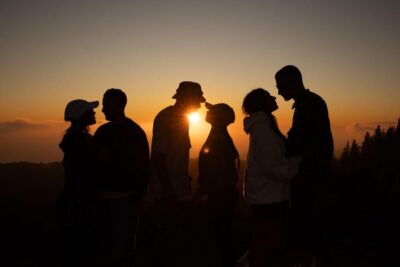
Teide National Park Sunset & Stargazing with Dinner (Star Safari)
Read our review →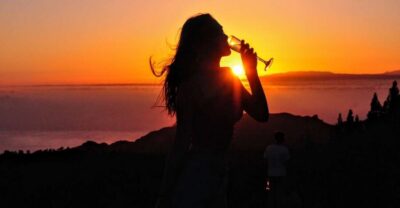
Teide National Park: Sunset & Stargazing Safari with Dinner
Read our review →
Mount Teide, Masca, Icod and Garachico Day Trip
Read our review →
Teide National Park Full-Day Tour with Pickup
Read our review →
Browse the lists this tour appears in