
Reviewed · TENERIFE DIVING COURSES
PADI Open Water Diver Course
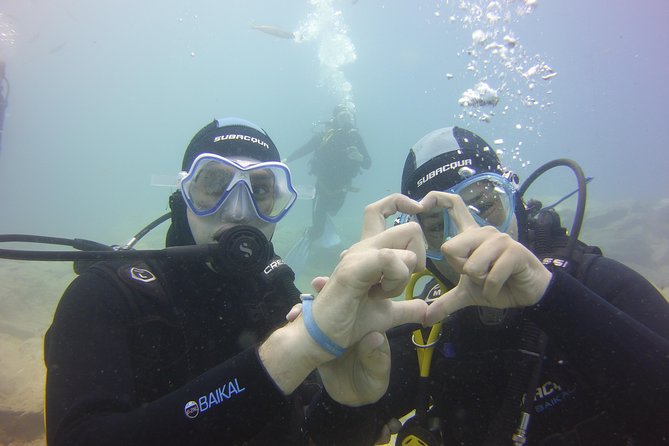
Tenerife’s volcanic seabed gives this PADI Open Water course a strong sense of place. Over about three days, you learn the basics in small groups, then practice underwater skills at several local sites where fish, octopus, rays, turtles, morays, and other sea life may appear.
I like the personal scale here, with groups often kept to four or fewer students, and I like that the price includes full equipment, course books, logbook, and PADI fees. The main caution is timing: the course can fill much of your day, and lunch is not included. Confirm the pickup radius before booking, since the supplied details list both 10 and 20 kilometers.
In This Review
- Key points to know before you book
- Learning scuba in a small Costa Adeje school
- What the three-day course includes
- Tenerife’s volcanic seabed and changing sites
- How the instructors shape the experience
- Equipment, pickup, and the practical side
- Health, age, and the effort involved
- What your certification allows
- Who should book this course?
- Should you book Ocean Trek?
- FAQ
- Where does the PADI Open Water course start?
- Is hotel pickup included?
- How long does the course take?
- What is included in the price?
- What is the minimum age?
- Can I cancel for a full refund?
Key points to know before you book
- Small-group instruction: The school generally keeps teaching groups intimate, with some sessions limited to four students.
- Three-day certification plan: Expect theory plus four required open-water sessions, though exact scheduling can vary.
- Tenerife’s volcanic seabed: Local sites offer changing underwater scenery and the chance to see octopus, cuttlefish, turtles, rays, barracuda, and morays.
- Named instructors: Juan, Gerhard, Manuel, Nelly, Pauli, Gema, Ryan, Maria, and Sean have all been involved with instruction and support.
- Pickup and equipment included: Local hotel transport, tanks, wetsuit, mask, fins, and other standard gear are covered within the package.
- Good for first-timers: You need no prior certification, but you do need reasonable health and moderate physical fitness.
Learning scuba in a small Costa Adeje school
Ocean Trek operates from C. Valencia in Costa Adeje, on Tenerife’s southwest coast. This is the base for the course, and the activity returns there after each session unless local pickup and drop-off are arranged.
The school’s small-group format is one of its best features. Learning scuba can feel awkward at first. You are handling unfamiliar equipment, breathing through a regulator, watching your air supply, managing your buoyancy, and trying to remember several safety steps at once. A large class can make that stressful. Here, the available course details point to a more personal setup, with some groups capped at four people.
That matters most during skill practice. You may need extra time with mask clearing, equipment checks, controlled breathing, or pressure equalization. Instructors can adjust the pace rather than pushing every student through the same routine. Juan is praised for taking a complete beginner calmly through the course, while Manuel is singled out for clear instruction and careful supervision.
The teaching approach described by past customers is straightforward: explain, demonstrate, imitate, then practice. That is exactly what you want in a beginner course. Good scuba instruction is not about sounding impressive. It is about making each task clear, watching you perform it, and correcting small problems before they become habits.
More diving courses on Tenerife:
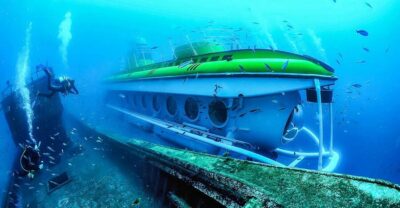
- Southern Tenerife: 50-Minute Submarine Dive
★ 4.8 · 2,216 reviews - Tenerife: Beginners Scuba Dive Experience in Turtle Area
★ 4.6 · 1,347 reviews - Tenerife: Beginner’s Dive at a Spot with Turtle Sightings
★ 4.7 · 627 reviews
What the three-day course includes
The course combines theory with practical sessions in the water. The theory may be completed through PADI eLearning before your holiday, or arranged as part of the course process. One detailed account estimates roughly eight to twelve hours of study for the online material, usually spread over several shorter sessions.
The material covers the basic rules of scuba, equipment, pressure, air use, safety, and what to do if something goes wrong underwater. You do not need to arrive as a science expert. You do need to take the study seriously, because the written work supports the skills you will use in the sea.
If you complete the online test before arriving, you may still need to answer additional questions at the school. This confirms that you completed the learning yourself. It is a useful safeguard, especially for a certification that you will rely on in other countries.
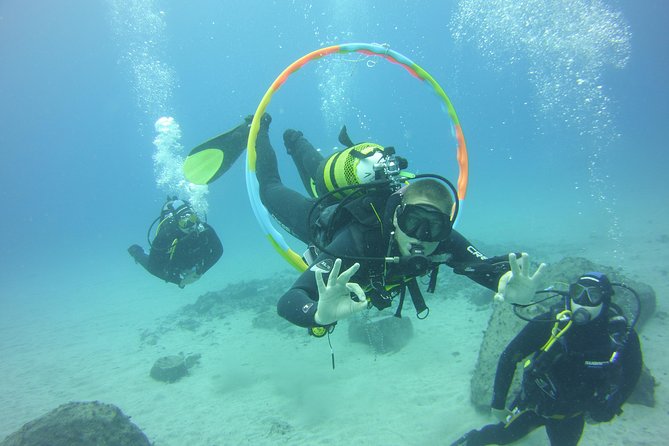
The practical part includes four required open-water sessions. The first may begin as an introductory session, while later sessions focus more closely on required skills in relatively shallow water before moving on to wider open-water practice. The exact order can change with weather, sea conditions, student progress, and the day’s site.
The course is advertised with scuba sessions twice a day. In practice, a morning session can keep you away from your hotel until after 2 p.m., once transport, preparation, the session, and return are included. Do not schedule a tight afternoon tour on the same day. You will also need time to dry off, eat, and rest between sessions.
One useful detail from the course reports is that skill training may happen with just you and your instructor, while a larger group joins later for another session. That gives you focused time when learning the basics, without losing the social side of a shared course.
Tenerife’s volcanic seabed and changing sites
Tenerife was shaped by volcanic activity, and that character continues below the water. Instead of a uniform sandy bottom, you may encounter rock formations, ledges, dark volcanic surfaces, and open areas where fish gather. The course takes place at different local sites, which adds variety to a short program.
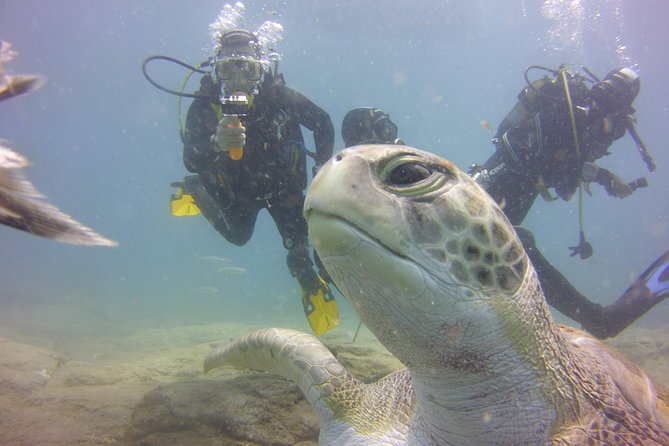
You should not book this as a guaranteed wildlife safari. Sea conditions and animal sightings change. Still, the range of creatures reported during the course is impressive for a beginner program: cuttlefish, octopus, sea turtles, stingrays, barracuda, and moray eels have all been seen.
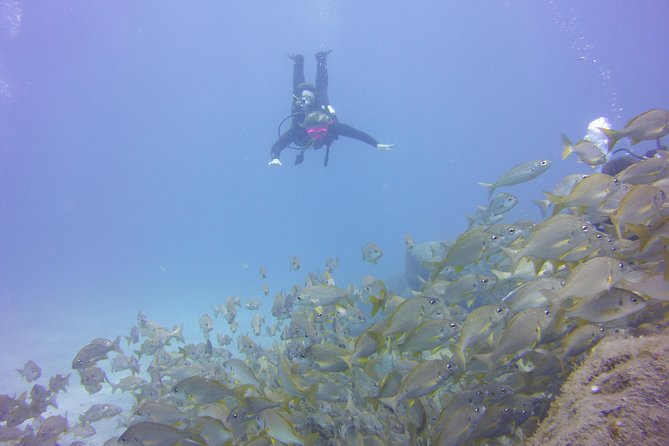
The chance to spot larger animals is a welcome bonus, but the real value is learning to notice the smaller world around you. Once you are comfortable breathing underwater, a rocky crevice can become the main event. You might find an octopus tucked away, a moray watching from a hole, or a school of fish moving across the rock.
Several course participants describe a turtle encounter as a highlight. That is wonderful if it happens, but the instructors cannot control wildlife. The reliable promise is the training, not a particular animal.
The location also suits first-time scuba students because the course starts with controlled practice. You are not expected to handle a demanding site before you have learned the basic procedures. The instructors can build your confidence step by step, which is more important than chasing the deepest or most dramatic location.
How the instructors shape the experience
The strongest pattern in the available feedback is praise for the instructors’ patience, warmth, and professionalism. Juan is described as calm with beginners. Gerhard is closely involved with the school and is praised for maintaining a friendly, personal operation. Manuel receives high marks for precise instruction, while Nelly and Pauli are described as warm and capable.
Other named team members include Gema, Ryan, Maria, and Sean. You may not work with every instructor, but the size of the staff gives the school some flexibility when arranging groups and sessions.
The teaching style seems particularly suited to people who feel nervous about breathing underwater. Instructors adjust to your pace instead of treating hesitation as a nuisance. That is a major advantage over a rushed class where the strongest student sets the speed for everyone else.
The small group structure also improves safety oversight. One account contrasts groups of four or fewer with larger classes of around eight students and one instructor. No group size can replace sound training, but closer supervision gives your instructor more time to watch your buoyancy, position, breathing, and response to instructions.
You should still speak up if something feels wrong. Tell the instructor if your mask leaks, your ears will not equalize, your equipment feels uncomfortable, or you need another explanation. A good course is not a test of how little help you need. It is a process of learning to manage yourself safely.
A completely different side of the island:
- Siam Park Entry Tickets
★ 4.5 · 15,710 reviews - Tenerife: Eco-Yacht Whale and Dolphin Watching and Swimming
★ 4.7 · 15,619 reviews - Los Cristianos Respectful No-Chase Whale and Dolphin Safari
★ 4.6 · 12,782 reviews - Tenerife: Loro Parque Entry Ticket
★ 4.8 · 12,411 reviews
Equipment, pickup, and the practical side
The package includes full scuba equipment, course literature, a logbook, bottled water, and PADI license fees. That makes the advertised price of $792.16 per person easier to assess. You are not paying only for time in the water. You are also covering instruction, certification costs, gear rental, course materials, and local transport.
Lunch is not included. Plan around that. If you have two sessions in a day, bring money or food for the gap, and ask the school how much time you will have between activities. Bottled water is supplied, but you should still arrive prepared for a long morning or afternoon away from your hotel.
Pickup is offered from hotels in the local area. The details give a maximum pickup distance of 10 kilometers in one place and up to 20 kilometers in another, so confirm your address when you book. If your accommodation is outside the service area, you will need to reach C. Valencia, Costa Adeje, on your own.
A practical clothing tip is worth following: bring dry clothes, a small towel, and, if you have one, a changing poncho. Getting changed after a sea session may happen at the site or in a busy parking area rather than in a polished changing room. A spare towel for your feet is useful if the ground is hot or dirty.
The school supplies the main equipment, but comfort still depends on fit. Tell the instructor right away if fins pinch, a mask does not seal, or a wetsuit feels too tight. The equipment is described as well maintained, and the staff are reported to find quick solutions when a problem appears.
Health, age, and the effort involved
The minimum age is 10. You also need to be in a reasonable state of health and have a moderate level of physical fitness. Scuba is not a strenuous race, but you will carry or handle equipment, enter and leave the water, swim, and remain attentive for extended periods.
The course is not a good place to hide a medical concern. If you have a condition that may affect your ability to exercise, equalize pressure, or respond calmly underwater, ask for medical guidance before booking. The supplied information does not give a detailed medical screening list, so direct questions to the provider are sensible.
Ear pressure deserves special attention for beginners. You need to equalize early and gently as you descend. Never force the process if it hurts. If you have trouble, tell your instructor and follow the instruction to rise slightly before trying again.
Leg cramps are another small but useful concern. Avoid overworking your calf muscles, particularly if you are not used to fin swimming. This is basic advice, but it can make a long session far more comfortable.
Service animals are allowed, and the meeting point is near public transportation. The activity is private for your group, although the course itself may include other students depending on the session. The practical meaning is that you should clarify the group arrangement if having a fully private class is important to you.
What your certification allows
After completing the course, you receive the PADI Open Water Diver certification. This allows you to scuba independently within the limits of your training, rent equipment, and have tanks filled for future sessions around the world.
That certification is the lasting value of the course. You are not simply paying for a one-time underwater outing. You are learning a skill that can be used on future holidays and at local scuba centers after you return home.
The word independently needs a sensible interpretation. Certification does not mean you should ignore local rules, weather, site conditions, or your own experience. You will still need a buddy, suitable conditions, and equipment that you know how to use. Your first certified outings should be conservative.
The course can also be a useful test of whether you want to continue. One student moved from the introductory course to Open Water, and another completed both Open Water and Advanced Open Water training within a week. You do not need to commit to advanced training, but a beginner course in Tenerife can show you if scuba feels natural or simply too much work.
Who should book this course?
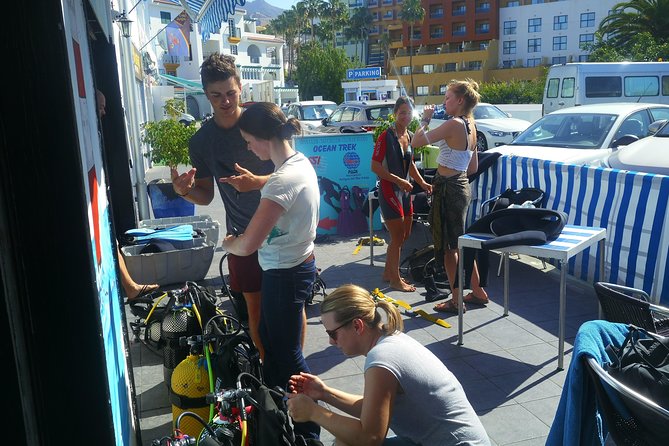
I would choose this course if you want a real certification rather than a short trial session. It suits beginners who value patient instruction, prefer small groups, and want a school where instructors can respond to their pace.
It is also a good match for couples or friends learning together. You can share the achievement while still receiving individual help during the skill sessions. The private activity format may appeal to people who dislike large commercial groups, though you should confirm exactly how many students will be in your scheduled class.
This is less suitable if you want a quick, low-commitment holiday activity. The study portion, four required open-water sessions, and repeated equipment preparation require time and attention. It is also a poor fit for anyone hoping to spend the entire day sightseeing around Tenerife during the three-day course.
The price is fair if you use the included services. Full gear, PADI fees, materials, logbook, bottled water, and pickup add up quickly when booked separately. It is less attractive if you already own equipment, have already paid for PADI eLearning, or do not need transport. Ask exactly what your booking includes before paying, especially since course prices and package details can change.
Cancellation is free up to 24 hours before the start time. Changes or cancellations inside that window are not refunded, and poor weather may lead to a new date or a full refund.
Should you book Ocean Trek?
Book it if your priority is careful instruction and a recognized qualification, not simply a quick look below the surface. The small groups, flexible teaching pace, included equipment, and range of local sea life make this a strong choice for a first PADI course in Tenerife.
Before booking, confirm the pickup distance, start times, number of students, and whether your theory work is completed online or at the school. Pack dry clothes, allow a full half-day for each session, and plan your meals. If you accept that this is a serious three-day course rather than a casual outing, the package offers good value and a useful skill you can carry to your next seaside holiday.
FAQ
Where does the PADI Open Water course start?
The course starts at Dive Centre Ocean Trek, C. Valencia, 38660 Costa Adeje, Santa Cruz de Tenerife, Spain. The activity ends back at the meeting point.
Is hotel pickup included?
Pickup and drop-off are included for locations within the stated service area. The details list a maximum distance of 10 kilometers in one place and up to 20 kilometers in another, so confirm your exact hotel with the provider.
How long does the course take?
The course lasts approximately three days. It includes theory and four required open-water sessions, with scuba sessions advertised twice daily.
What is included in the price?
The package includes local pickup and drop-off, full scuba equipment, course literature, a logbook, PADI license fees, and bottled water. Lunch is not included.
What is the minimum age?
The minimum age is 10 years. Participants should also be in reasonable health and have a moderate level of physical fitness.
Can I cancel for a full refund?
Yes. You can cancel at least 24 hours before the experience start time for a full refund. Cancellations or changes made less than 24 hours before the start time are not refunded, while weather cancellations may result in another date or a full refund.
Recently added around Tenerife
- Tenerife: Luxury Private Whale & Dolphin Watching Tour★ 4.9 · 14 reviews
- Teide National Park: Moonlight Tour & Stargazing Experience★ 5.0 · 14 reviews
- Discover Scuba Diving, free pictures included★ 5.0 · 14 reviews
- Ticket to Aqualand Tenerife★ 4.0 · 15 reviews
- Forest & Off Road National Park Quad Biking Tour★ 5.0 · 14 reviews
- private charter 3 Hours Whale Encounter puerto colon adeje★ 5.0 · 14 reviews
- Tenerife Under The Sea – dive into 1-1 personalised experience★ 5.0 · 15 reviews
- Wine Tasting Experience in Tenerife★ 4.5 · 15 reviews
Tenerife Diving Courses, compared.
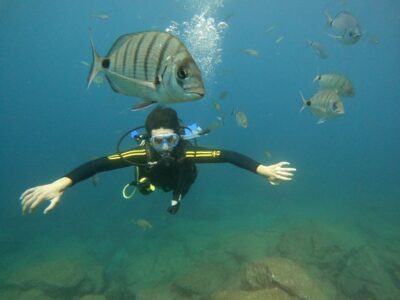
Beginners Scuba Dive Experience in Turtle Area
Read our review →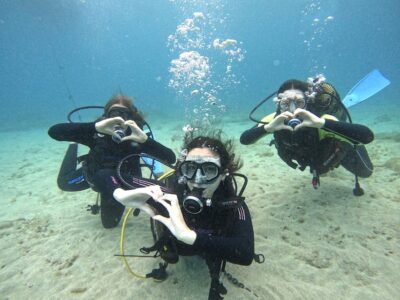
Beginner’s Dive at a Spot with Turtle Sightings
Read our review →
Tenerife First Time Scuba Dive – Turtle Habitat, Small Groups
Read our review →
Try Dive – PADI Discover Scuba Diving in Tenerife
Read our review →
RECREATIONAL DIVE (certified divers only) : Explore Canarian Sealife
Read our review →
guided Scuba Diving on Tenerife (for certified divers)
Read our review →
Browse the lists this tour appears in