
Reviewed · WHALE WATCHING
Costa Adeje: Whale Watching Eco Experience with Hydrophone.
The most unusual part of this Costa Adeje boat trip is not simply seeing whales. It is hearing them underwater through a hydrophone while the boat’s engines are switched off. You cruise in Europe’s only whale sanctuary with a biologist on board, rather than treating the sea like a wildlife theme park.
I like the small limit of 10 passengers, which gives the two-person crew room to explain what you are seeing. I also like the serious conservation work behind the trip, including rescue efforts and photo-identification research on pilot whales. The main consideration is that wildlife sightings can never be guaranteed, and the open Atlantic can be rough for anyone prone to seasickness.
In This Review
- Key points to know before you book
- Why the hydrophone changes whale watching
- Setting out from Costa Adeje
- Searching the sanctuary for pilot whales and dolphins
- What the engines-off policy means
- A small crew with room for questions
- Conservation beyond the boat trip
- How the 2.5-hour outing feels in practice
- Value, booking flexibility, and the small-boat trade-off
- Who should choose this Costa Adeje whale-watching trip
- Should you book Atlantic Eco Experience?
- FAQ
- How long does the whale-watching experience last?
- Where does the boat trip take place?
- What boat is used?
- How many people can join the trip?
- Which animals might I see?
- Will I hear whales or dolphins?
- Which languages are available?
- What should I bring?
- Can I cancel the booking?
Key points to know before you book
- Hydrophone listening: Hear the sounds whales and dolphins use to communicate or hunt.
- Papacho 2: Travel on a small boat with a maximum of 10 passengers, not a large party vessel.
- Protected waters: The trip operates off Costa Adeje in Europe’s only whale sanctuary.
- Engines off near wildlife: The crew stops the motors during sightings to reduce disturbance.
- Biologist-led outing: Learn about cetaceans, turtles, seabirds, and marine conservation as you watch.
- Strong pilot whale sightings: The most praised part of the experience is seeing groups of pilot whales close to the boat.
Why the hydrophone changes whale watching
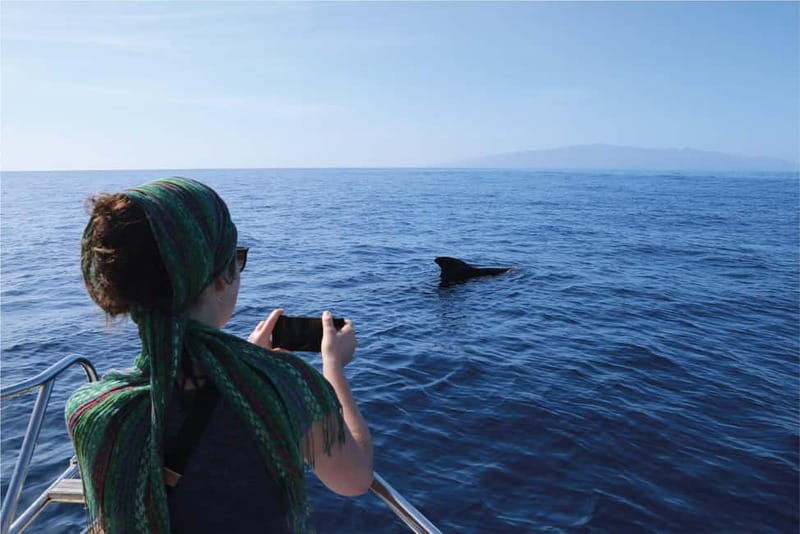
Many whale-watching trips are built around the next fin, splash, or tail. Here, the hydrophone adds another layer. Once the boat is stopped, the crew lowers the listening device into the water so you can hear the sounds made below the surface.
That matters because whales are often easier to hear than to see. A pilot whale may surface briefly, then disappear while its group continues moving below you. The hydrophone gives you something to focus on during those quiet stretches, and it helps explain how cetaceans communicate and hunt.
You should keep your expectations sensible. This is not an underwater concert, and the activity does not promise that you will hear a particular species or a long sequence of calls. Conditions and animal behavior control the result. Still, the listening session makes the trip feel more like a wildlife study than a simple sightseeing ride.
The engines are completely turned off during the sighting. That is good for the animals, but it also changes the mood on board. Without the motor running, you can pay closer attention to the water, the sounds from the hydrophone, and the crew’s interpretation of what is happening.
More around Costa Adeje:
- Costa Adeje: Whale & Dolphin Eco-Cruise with Snacks & Drinks
★ 4.6 · 5,096 reviews - Costa Adeje: Whale Watching Catamaran Tour with Drinks
★ 4.7 · 3,653 reviews - Whale Watching Eco-Adventure from Costa Adeje
★ 5.0 · 2,066 reviews
Setting out from Costa Adeje
You meet the crew at the agreed meeting point and board Papacho 2 at the scheduled time. The boat carries no more than 10 passengers, with two crew members providing a more personal setup than the large catamarans common along Tenerife’s south coast.
The small capacity is especially useful for wildlife watching. You are less likely to be separated from the guide’s explanation, and there should be less competition for a clear view around the boat. It also keeps the outing from feeling like a crowded party cruise.
A biologist on board explains the marine life you may encounter and the conservation issues connected to it. The focus is not just on naming an animal. You learn to watch its movement, group behavior, and relationship with the surrounding water.
Drinks are provided during the trip. You should still bring sunglasses, a sun hat, and sunscreen, as the boat offers little relief from direct sunlight once you are out at sea.
Searching the sanctuary for pilot whales and dolphins
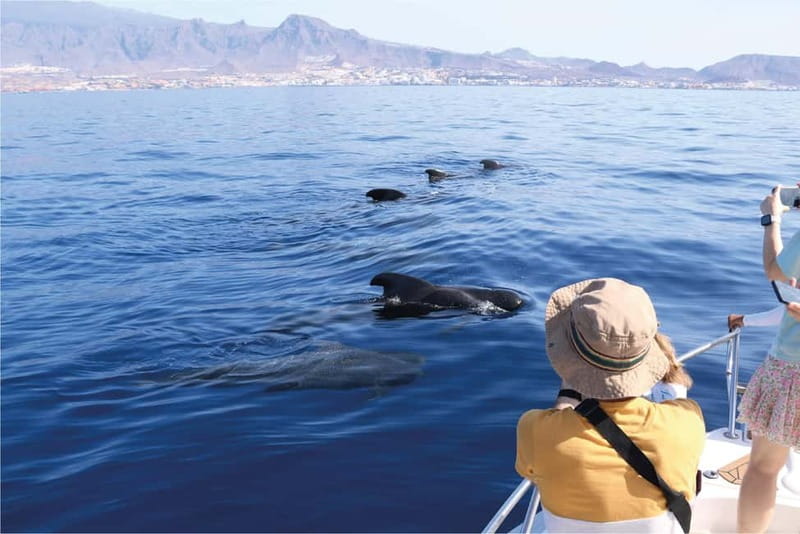
The main search area is the protected water off Costa Adeje. The excursion lasts about 2.5 hours, giving the crew time to look for different groups of cetaceans rather than rushing out for a quick photograph and turning back.
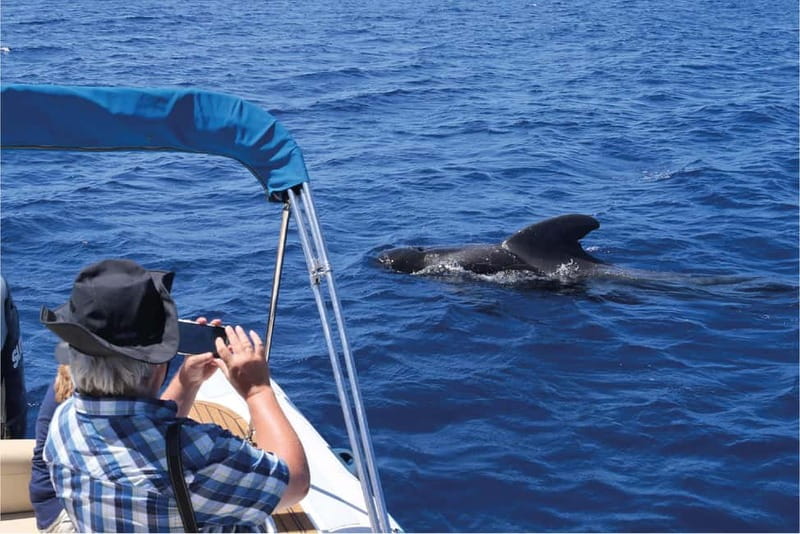
Pilot whales are a particular highlight here. They are social animals that often move in groups, so one sighting can offer more than a single brief glimpse. You might watch several animals surface in sequence, then see the group shift direction or gather close together.
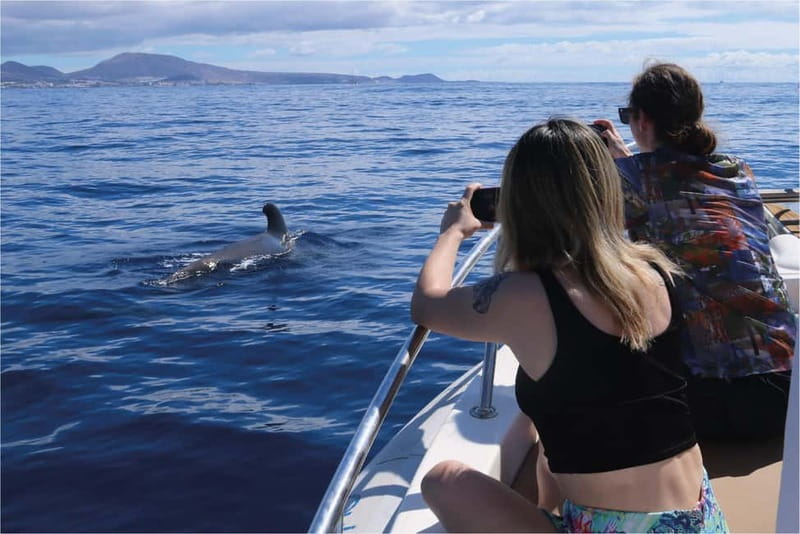
Dolphins may also be encountered, along with turtles and seabirds. The exact mix depends on the day. The crew approaches animals carefully and keeps a safe distance, allowing you to watch natural behavior instead of encouraging the animals to come closer.
That approach can mean fewer dramatic close-up pictures. It is also the right trade-off for a conservation-focused trip. The goal is to observe without chasing, blocking, feeding, or changing the animals’ movements.
One practical point is worth remembering: a whale-watching outing is never a guaranteed wildlife appointment. The excursion is designed around finding marine life, but nature sets the timetable. You may see several groups of pilot whales, as many people do, or spend more time scanning the water before a sighting develops.
What the engines-off policy means
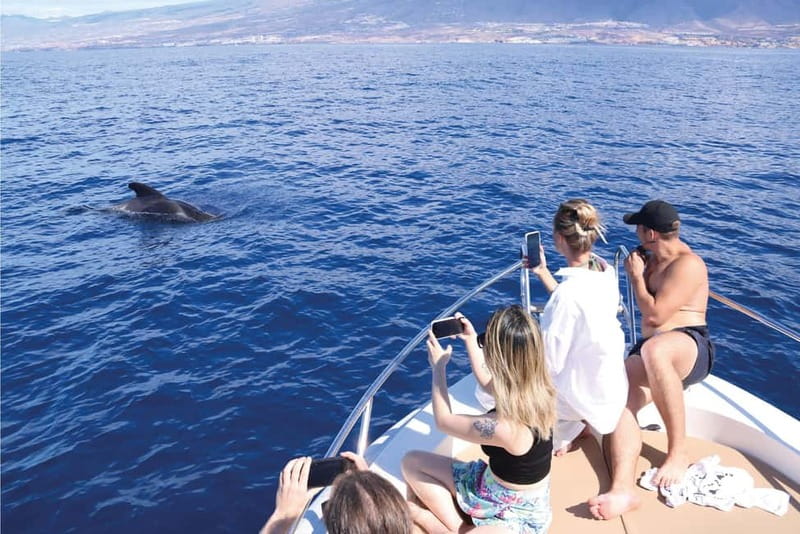
The crew’s decision to stop the motors around wildlife is one of the clearest signs that this trip takes its stated environmental aims seriously. Boat noise can affect marine animals, so switching off the engines reduces one source of disturbance while you are watching.
For you, the policy creates both a benefit and a small limitation. The benefit is a quieter and more respectful encounter. You may notice subtle sounds and movements that would be lost under a running engine.
The limitation is that the boat cannot instantly reposition while the motors are off. The crew must balance a safe distance, the animals’ movements, and the need to avoid interfering. This may feel slower than a standard sightseeing cruise, but slow is part of the point.
The crew also takes part in rescue and rehabilitation work for injured marine animals. That does not mean a rescue will form part of your outing. It does mean your booking supports a company connected to practical animal protection, rather than a business focused only on taking people to sea.
More whale watching trips from Tenerife:
- Tenerife: Eco-Yacht Whale and Dolphin Watching and Swimming
★ 4.7 · 15,619 reviews - Los Cristianos Respectful No-Chase Whale and Dolphin Safari
★ 4.6 · 12,782 reviews - Los Gigantes: Dolphin & Whale Watching Cruise with Swim Stop
★ 4.7 · 4,539 reviews - Tenerife: Whale & Dolphin Watching with Drinks and Snacks
★ 4.4 · 2,929 reviews
A small crew with room for questions
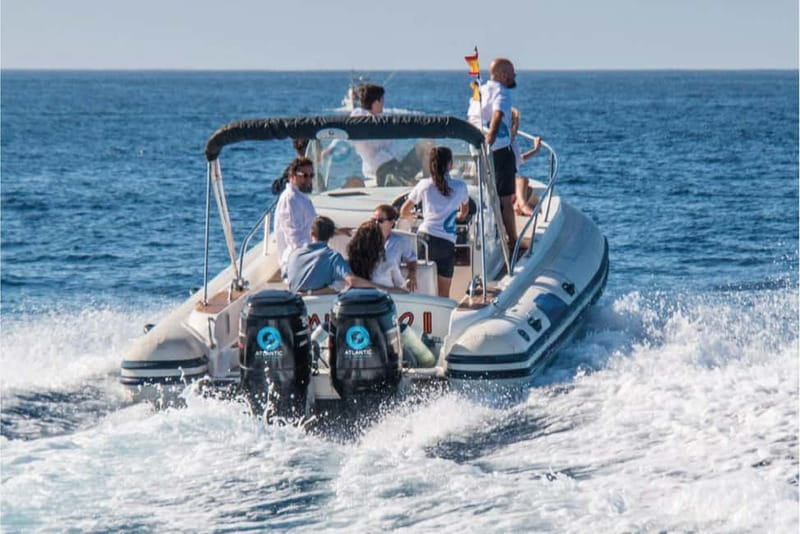
The experience uses a team of two trained crew members, including the biologist who explains the wildlife and conservation work. With only 10 places on the boat, you get a better chance to ask questions and follow the guide’s attention when an animal appears.
This personal scale has been one of the strongest points for the outing. The crew is described as friendly and experienced, and the small format suits people who prefer explanation and observation over loud music or a party atmosphere.
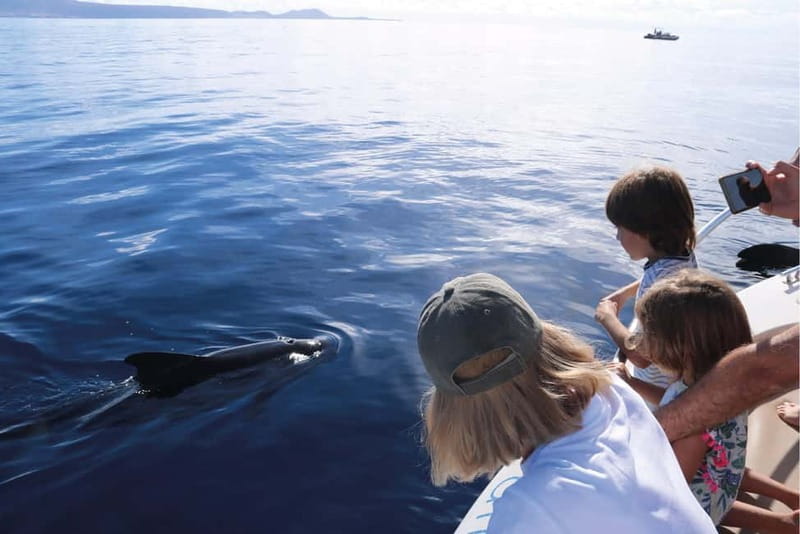
It is also a good arrangement for families. The trip has been considered suitable for families with small children, though parents should still think about the 2.5-hour length, sun exposure, and the possibility of movement on the sea. Children who enjoy animals may find the hydrophone particularly engaging because it gives them something to hear as well as something to watch.
The languages offered are English and Spanish. If you need detailed explanations in another language, this is not the right choice based on the information available.
Conservation beyond the boat trip
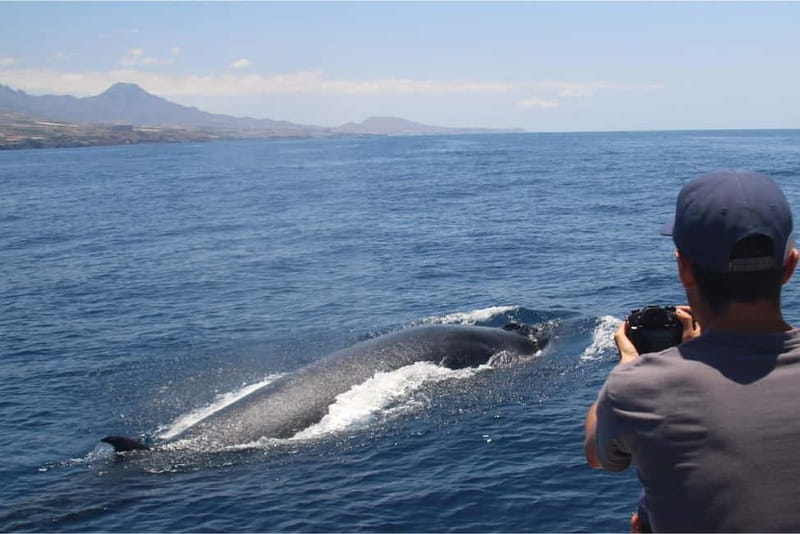
Atlantic Eco Experience belongs to ACEST, the Association of Companies for the Sustainability of Tourism. Its work also includes participation in a photo-identification catalog of pilot whales in the Canary Islands.
Photo-identification uses natural markings and features to help distinguish individual animals. In practical terms, this can contribute to longer-term research on where pilot whales travel, how groups are structured, and how their numbers and behavior change.
You will not be sitting through a research lecture for the full 2.5 hours. The value is that the guide can connect what you see with a wider effort to understand and protect the species. A whale is not just a sighting to tick off. It is part of a population being studied over time.
That research link also gives the trip a stronger sense of purpose. You still get the pleasure of being on the water and looking for whales, but the encounter is framed around respect, observation, and the health of the marine environment.
How the 2.5-hour outing feels in practice
The trip begins with a briefing from the biologist about the animals you may find and the rules for approaching them. You then head into the sanctuary, watching the water for cetaceans, turtles, and seabirds.
When the crew finds a group, the boat approaches carefully and keeps a safe distance. The guide helps you interpret what you are seeing, which is useful when animals surface only briefly or move in ways that are hard to follow.
The engines are stopped during the sighting. The hydrophone is lowered, and the experience shifts from a moving boat ride to a quiet period of observation and listening.
After the encounter, the boat continues looking for other groups or species before returning. The 2.5-hour duration gives the outing enough time to include several wildlife encounters when conditions cooperate, though it can feel long if the sea is unsettled or sightings are limited.
You should dress for sun and bring the basics listed by the operator: sunglasses, a hat, and sunscreen. Drinks are available on board. The information does not specify a special seasickness policy, so anyone sensitive to boat motion should plan carefully.
Value, booking flexibility, and the small-boat trade-off
The exact price is not provided here, so I cannot judge the cost against a specific fare. I can judge what you receive for it. The value is strongest if you care about a small group, a biologist-led explanation, responsible wildlife practices, and the hydrophone session.
You are not paying only for transport to a whale sighting. You are paying for a more focused experience, a two-person crew, limited capacity, conservation work, and time spent listening as well as looking.
A larger boat may offer more space and a steadier ride. It may also carry many more people and provide a less personal experience. Papacho 2 makes the better choice for you if the quality of the encounter matters more than having a wide deck or lots of onboard facilities.
The booking terms add useful flexibility. You can reserve now and pay later, and cancellation is allowed up to 24 hours before the activity for a full refund. Starting times vary, so you need to check availability when choosing a date.
Who should choose this Costa Adeje whale-watching trip
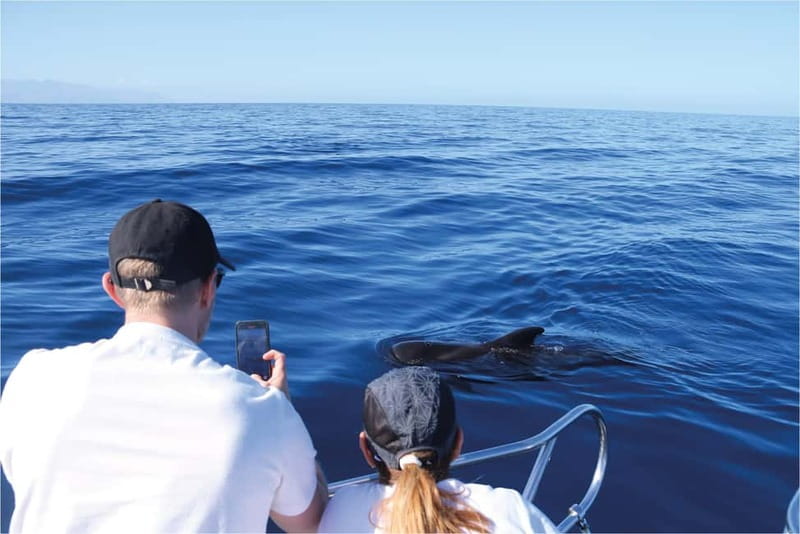
I would choose this outing if you want wildlife watching with a clear conservation ethic. It suits couples, families with children, and solo visitors who would rather ask questions than sit in a crowd.
It is also a strong pick for anyone interested in the science of animal communication. The hydrophone is the feature that separates this trip from a standard search for fins and tails.
You may want a different type of boat trip if your main goal is a guaranteed close-up photograph, onboard entertainment, or a large stable vessel. Wildlife is unpredictable, and the crew’s responsible distance rules can limit the perfect camera angle.
The activity is offered in English and Spanish, and the maximum group size is 10. That makes it a better fit for people who value personal attention and a quieter tone.
Should you book Atlantic Eco Experience?
Book it if you want a small, conservation-minded whale-watching trip with a real chance to see pilot whales and the unusual bonus of hearing cetaceans through a hydrophone. The friendly crew, biologist-led interpretation, and engines-off policy give the outing more substance than a basic boat ride.
Skip it if you need a guaranteed animal encounter, dislike open-water motion, or prefer a large vessel with more room and facilities. For everyone else, especially families and wildlife fans, this is a thoughtful way to explore the waters off Costa Adeje without treating marine life as a performance.
FAQ
How long does the whale-watching experience last?
The experience lasts 2.5 hours. Starting times vary, so check availability when booking.
Where does the boat trip take place?
The trip operates from Costa Adeje on the south coast of Tenerife, in Europe’s only whale sanctuary.
What boat is used?
The experience uses Papacho 2, which has a maximum capacity of 10 passengers.
How many people can join the trip?
The group is limited to 10 participants, giving you a small-group experience with two crew members.
Which animals might I see?
The crew looks for cetaceans such as pilot whales and dolphins, as well as turtles and seabirds. Sightings depend on natural conditions and animal behavior.
Will I hear whales or dolphins?
The crew uses a hydrophone during sightings so you can listen to sounds used by cetaceans for communication or hunting. The boat’s engines are turned off at this time.
Which languages are available?
The live tour guide service is offered in English and Spanish.
What should I bring?
Bring sunglasses, a sun hat, and sunscreen. Drinks are provided on board.
Can I cancel the booking?
You can cancel up to 24 hours in advance for a full refund. The reserve-now, pay-later option is also available.
Recently added around Tenerife
- Los Cristianos: Stand Up Paddle Board Lesson★ 5.0 · 3 reviews
- Radazul: Family-Friendly Snorkeling Tour★ 5.0 · 3 reviews
- 3h Whale Watching Private tour Beneteau Oceanis 440★ 5.0 · 3 reviews
- Go West – VIP Private Tour in Tenerife to Masca, Garachico and Icod★ 5.0 · 3 reviews
- Tenerife Exclusive & Private Gastronomic, Sunset-Stargazing★ 5.0 · 3 reviews
- Whale & Dolphin Watching With Mustcat Virgin Coast Trip On a Large Catamaran★ 4.0 · 3 reviews
- BH SL1 2.9 Road Bike Rental in Tenerife★ 5.0 · 3 reviews
- Eco Adapted Diving in Tenerife★ 5.0 · 3 reviews
Whale Watching, compared.
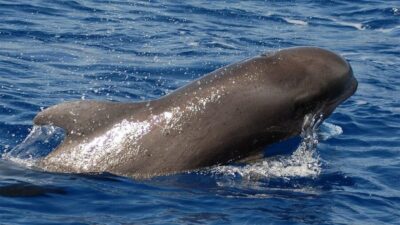
Eco-Yacht Whale and Dolphin Watching and Swimming
Read our review →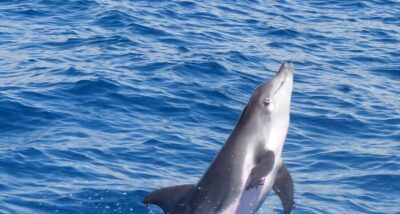
Los Cristianos Respectful No-Chase Whale and Dolphin Safari
Read our review →
Whale & Dolphin Eco-Cruise with Snacks & Drinks
Read our review →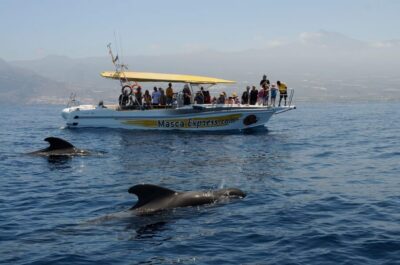
Dolphin & Whale Watching Cruise with Swim Stop
Read our review →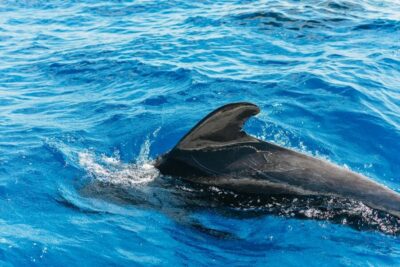
Whale & Dolphin Watching with Drinks and Snacks
Read our review →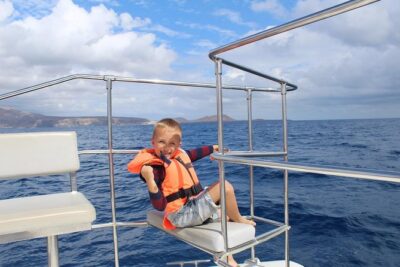
Whale and Dolphin Watching Catamaran with Transfer and Buffet
Read our review →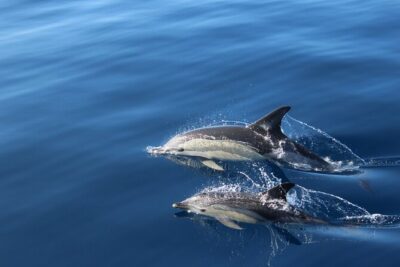
No chase Whale & Dolphin tour putting Marine Life first – we care
Read our review →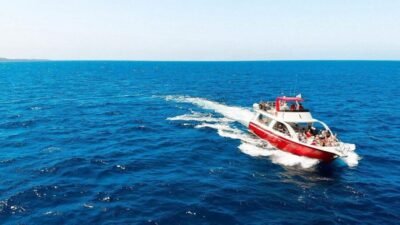
Browse the lists this tour appears in